TITLE: I carbonai di Serra san Bruno
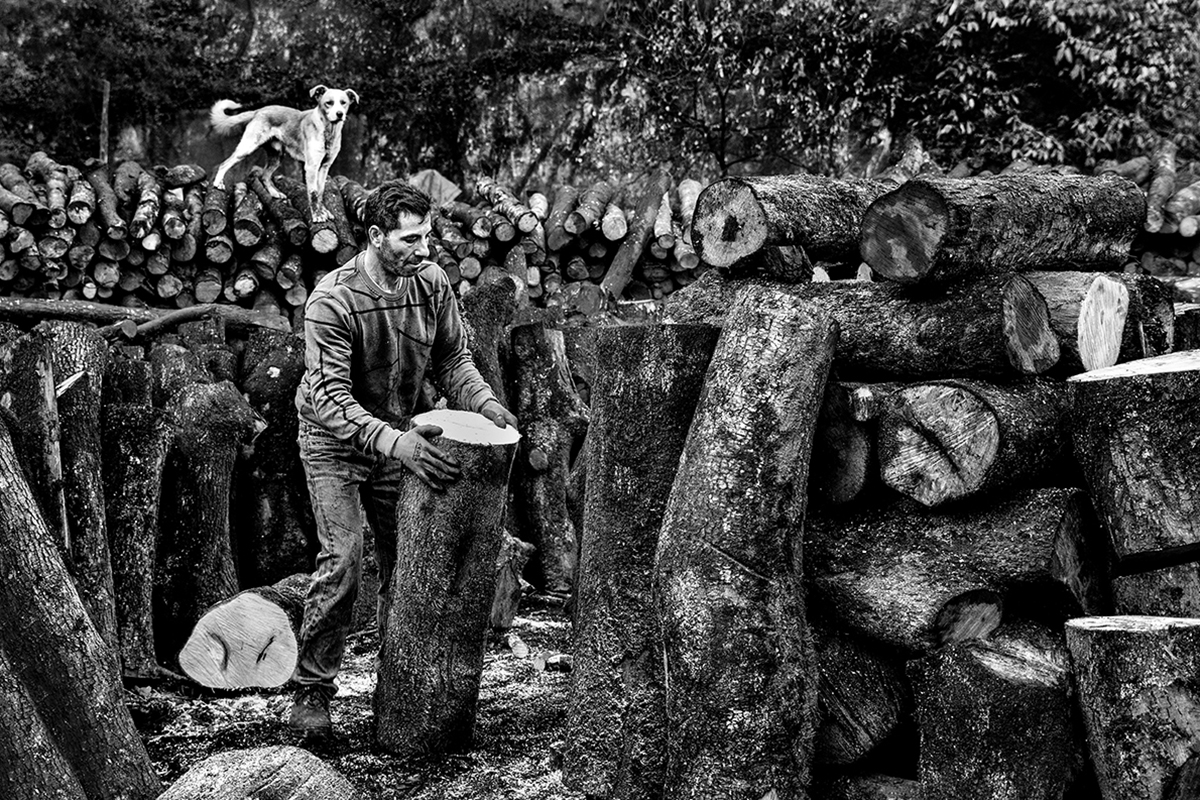
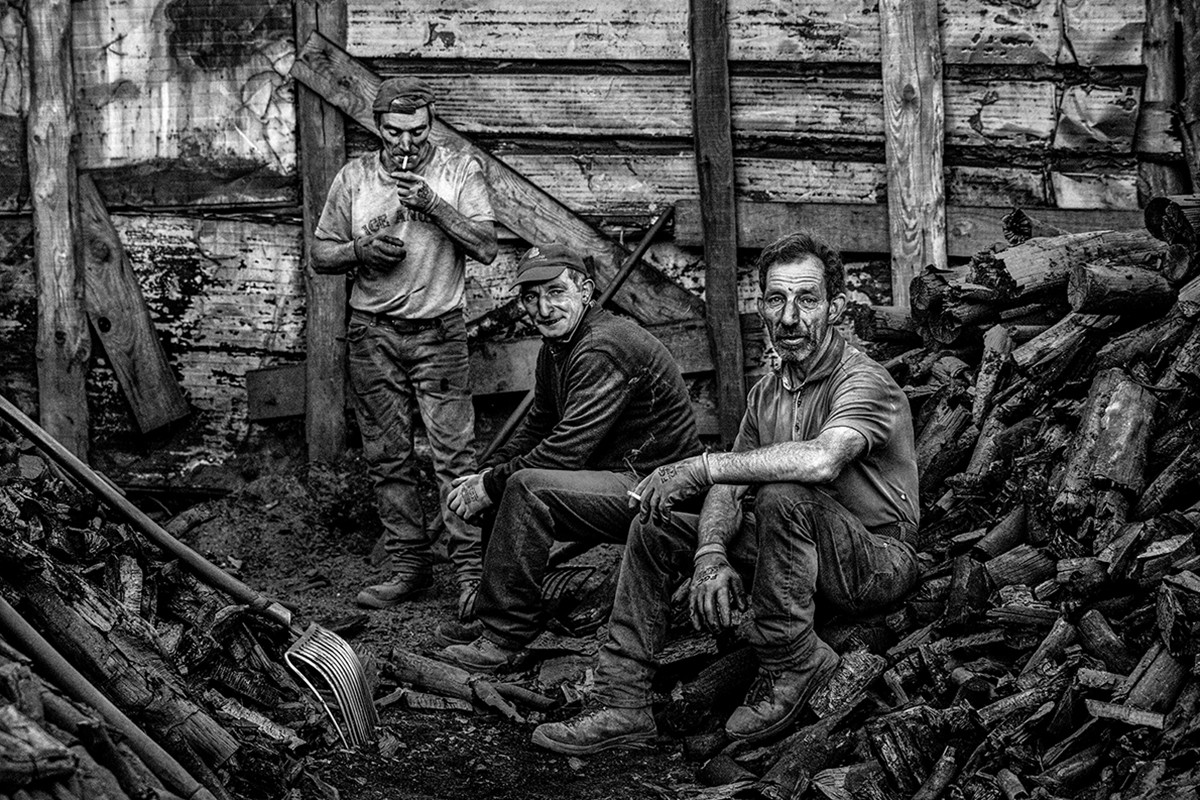
Charcoal production was a necessary activity in times gone by, when gas was scarce or non-existent and charcoal was used for heating and cooking. It is therefore an ancient craft, which seems to have existed among the Phoenicians around 500 years before Christ, but which is now sadly dying out. Another piece of knowledge born of human ingenuity that is being lost on the altar of progress and technology. Here we are in Calabria, in Serra San Bruno, probably the last stronghold of charcoal burners in Italy. Its existence today is closely linked to the practice of barbecuing, especially in restaurants. This is a very common practice in southern Italy. A group of families manages numerous charcoal kilns that are in operation all year round.
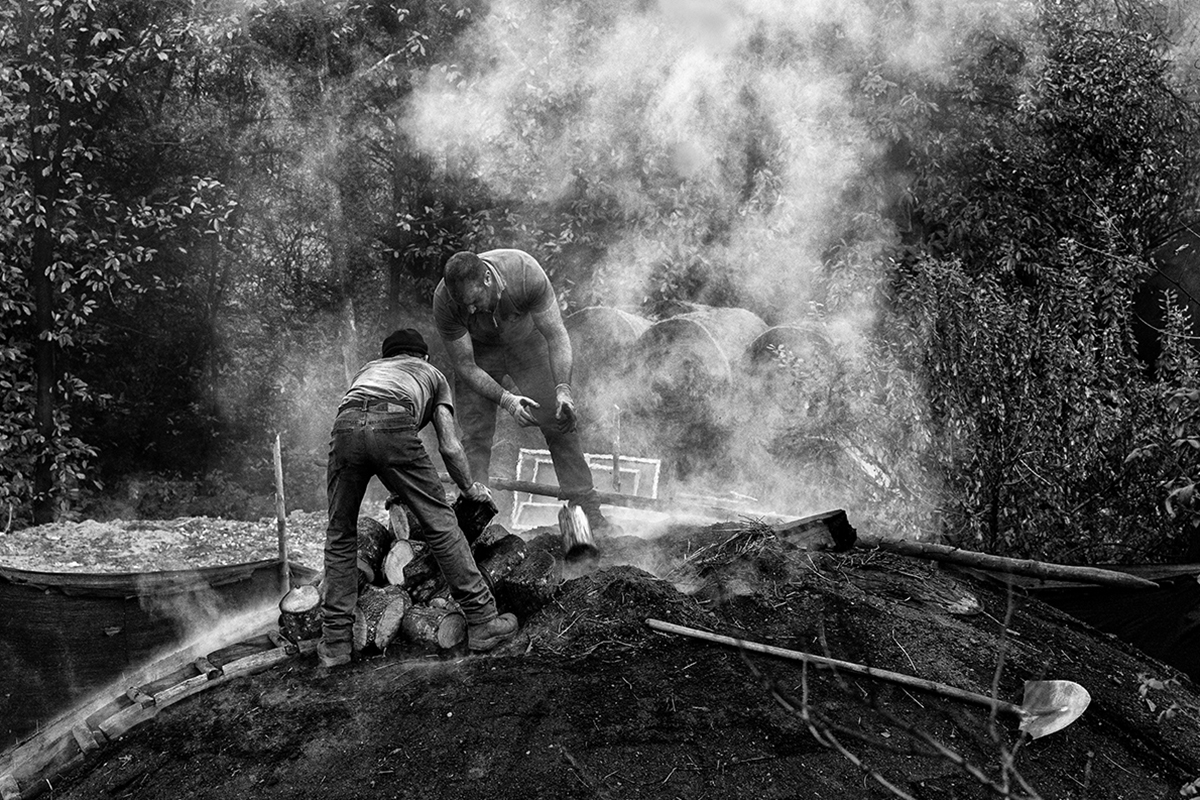
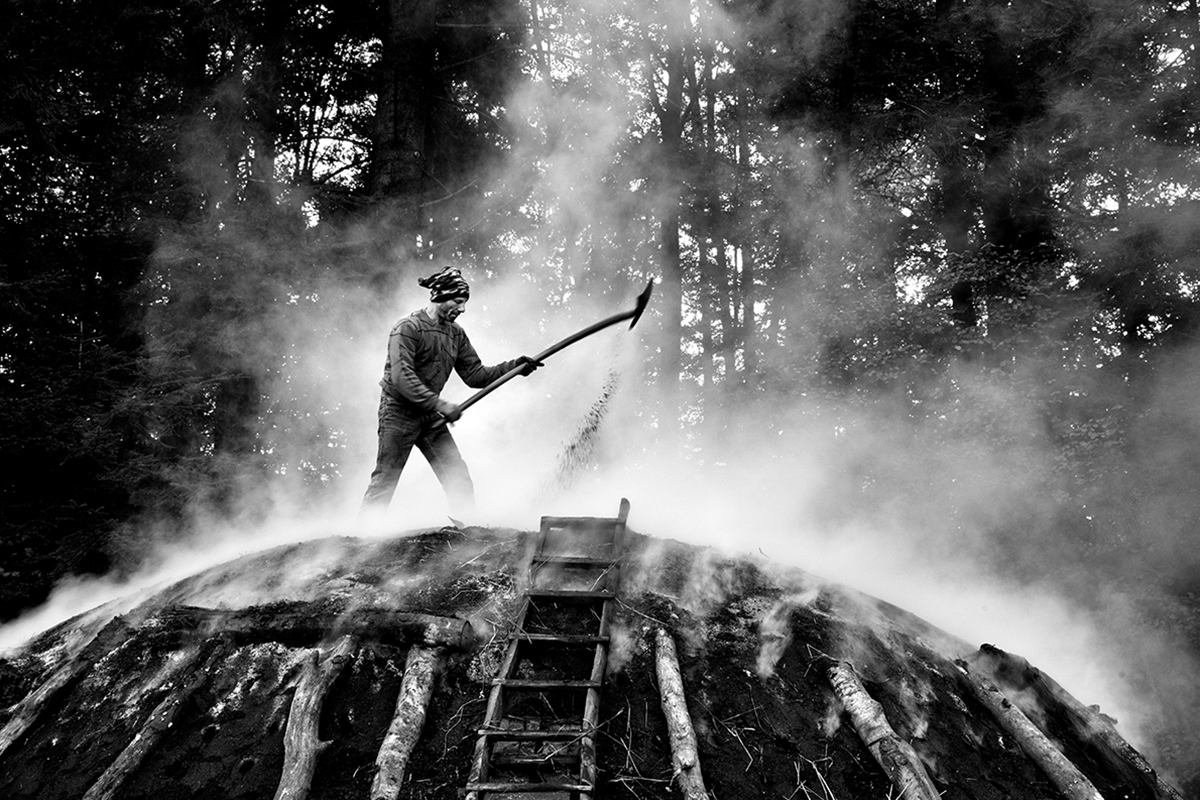
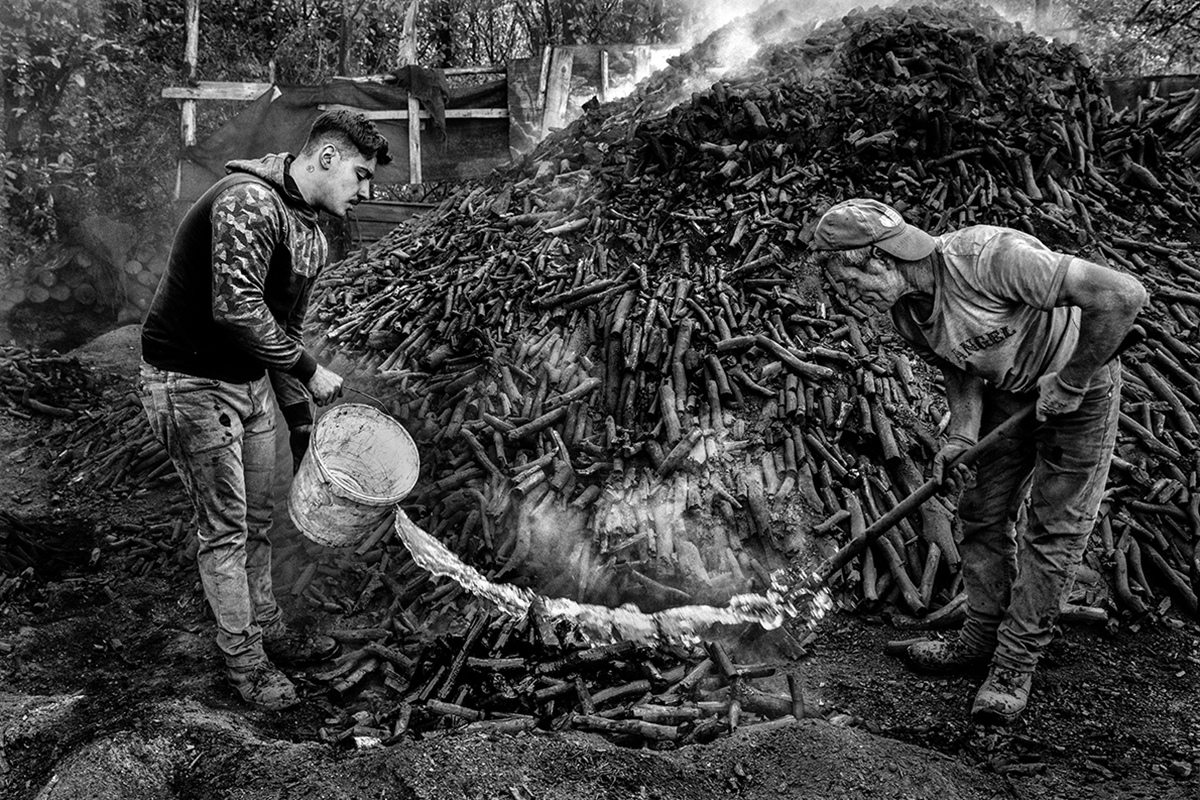
Let's see how a charcoal kiln is built. Once a large circle has been made with all the wood that will be needed (about 100 quintals), a chimney is built in the centre using the largest logs. This chimney is then covered with the remaining wood to form a dome. A layer of straw and a layer of earth are placed on top and carefully compacted. The ignition source is inserted into the chimney from above to start the combustion process. It usually takes 15-20 days to obtain charcoal. The charcoal kiln must be fed so that combustion remains at the right level. When the charcoal burner decides that the time is right, he opens the top and adds new wood. The opening is then covered with straw and earth.
From time to time, if necessary, earth is added to the outside, which is then compacted with a special tool.
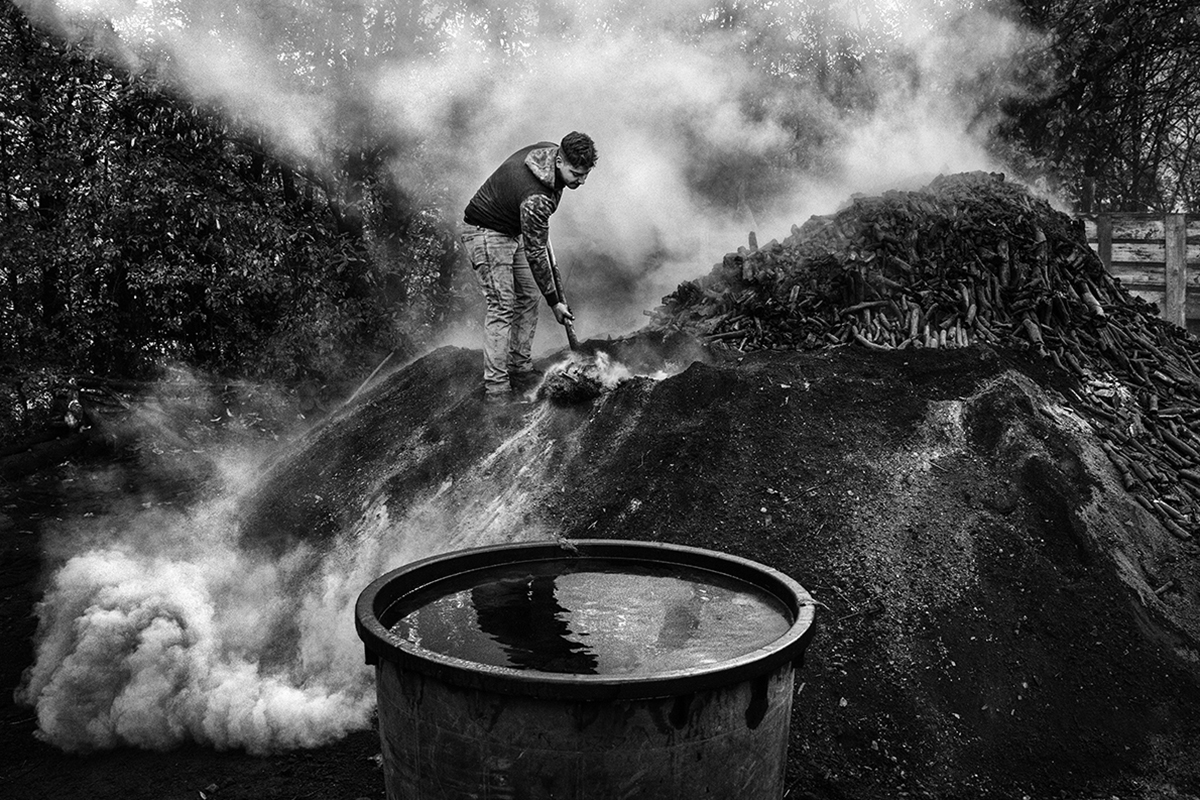
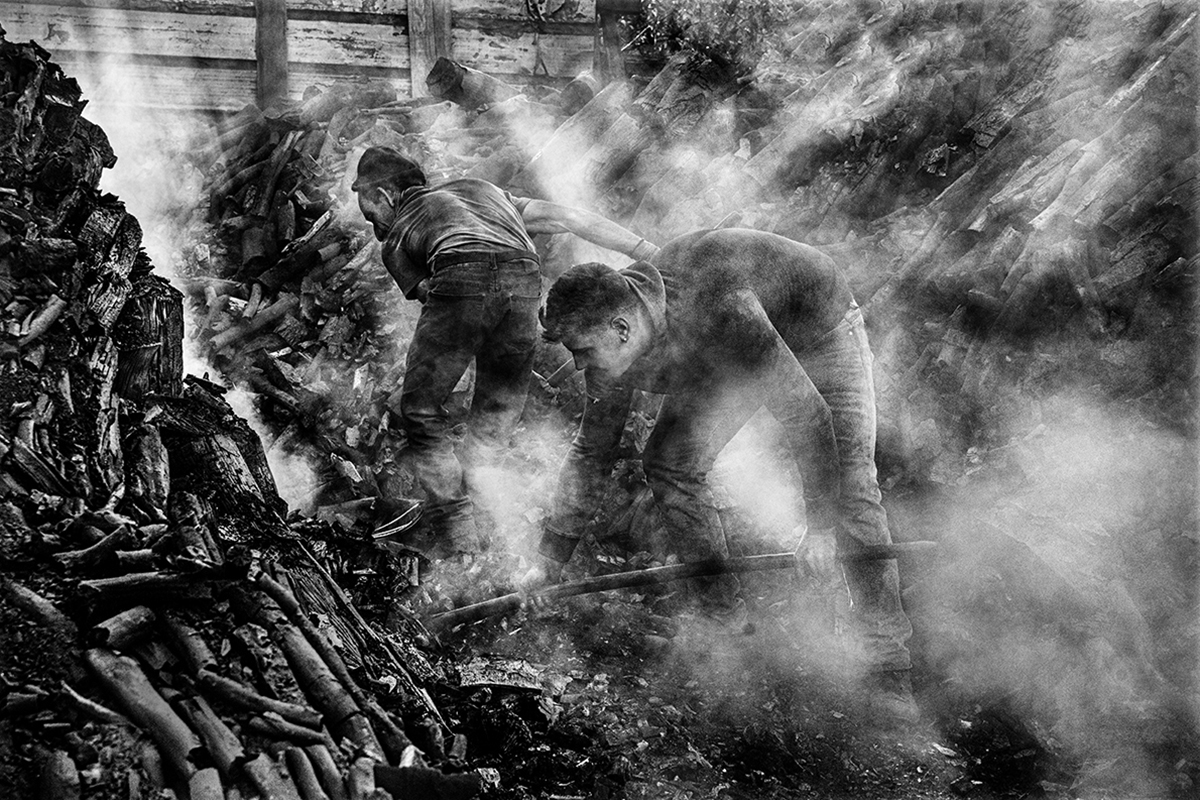
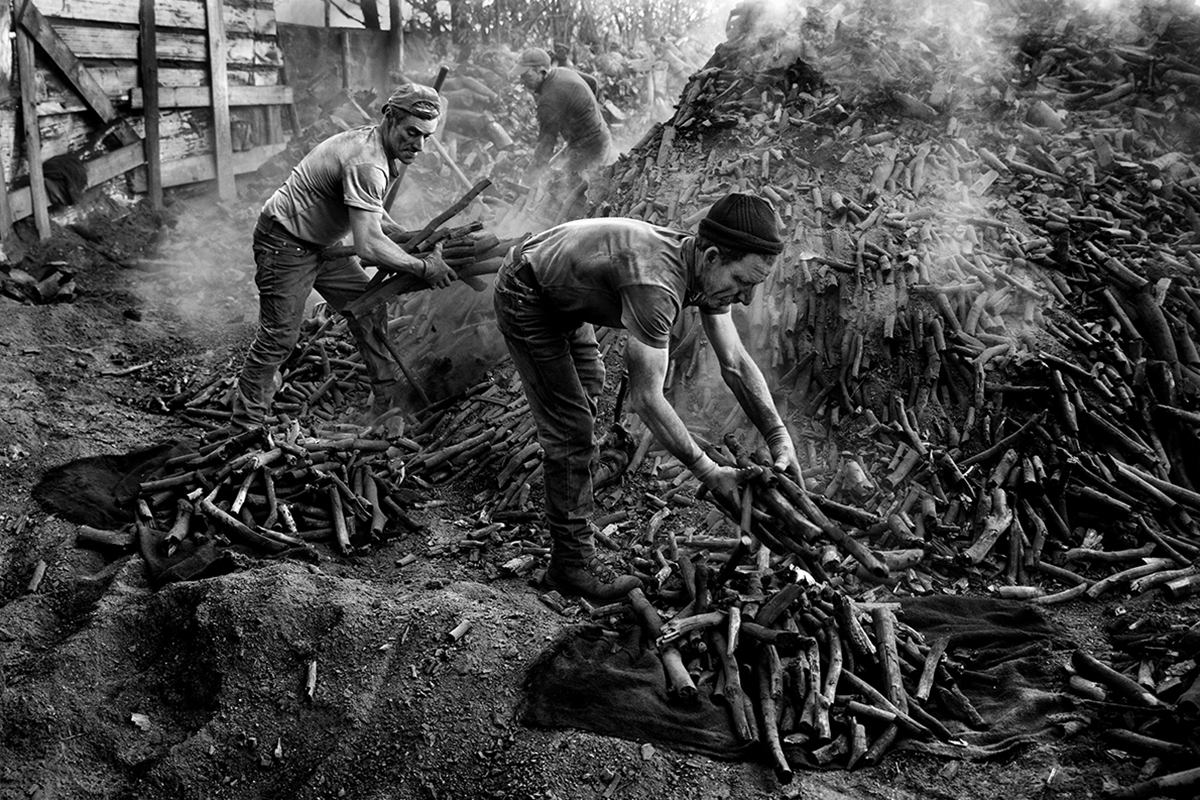
Charcoal extraction is the final stage in the “cultivation” of charcoal. This is when the charcoal is ready and the charcoal kiln must be dismantled, At one point, as I was trying to get as close as possible (remember R. Capa's words?) without getting in the way, I found myself practically covered in dust and with my airways in terrible condition. It was then that I truly understood what this job entails. And then you think that these admirable people do it every day for years and years, from a very young age. And you automatically wonder what the consequences are for their health. Talking to some of them, the harshness of their lives emerged and my thoughts automatically turned to those people who complain about their office jobs.
AUTHOR: Massimo Cavalletti (Italy)
I was born in Lucca on a day long ago in the last century. In 1980, I bought my first Pentax. My photographic training was strongly focused on experimentation and creativity, for which I am grateful to the Fotoclub Lucchese BFI. I started out favouring black and white for its expressive qualities, producing sequences and photomontages that gave me a lot of satisfaction in the FIAF world. The advent of digital photography intrigued and fascinated me because of the possibilities it offers, especially in the development of raw files. I look back on my analogue past without regret, but with gratitude for what it taught me. If I am able to produce good images today, I owe it mainly to the experience I gained with film. I like all genres of photography, but I am particularly passionate about landscape, portraiture and reportage. I take part in competitions, which I consider to be a testing ground from which to draw conclusions about the validity of my images. In this field, I have achieved such impressive results that I have earned numerous national and international honours. For three years, I held the position of Provincial Delegate of Lucca for the FIAF. For years, I collaborated with the MAXARTIS website on activities aimed at developing a culture of photography. I briefly published a book entitled “Cercando un'altra vita” (Looking for another life) for “Il Labirinto dell'Immagine”, a black and white reportage on the rehabilitation ward of the hospital in Barga in the province of Lucca. I have exhibited my photos in various cities and am occasionally asked to show them at various clubs. Today, after so many years, I realise that photography has entered my bloodstream like a lifeblood that sustains me, and I don't know if I could do without it.
SHARE
Support this photographer - share this work on Facebook.