TITLE: Everyones View Point
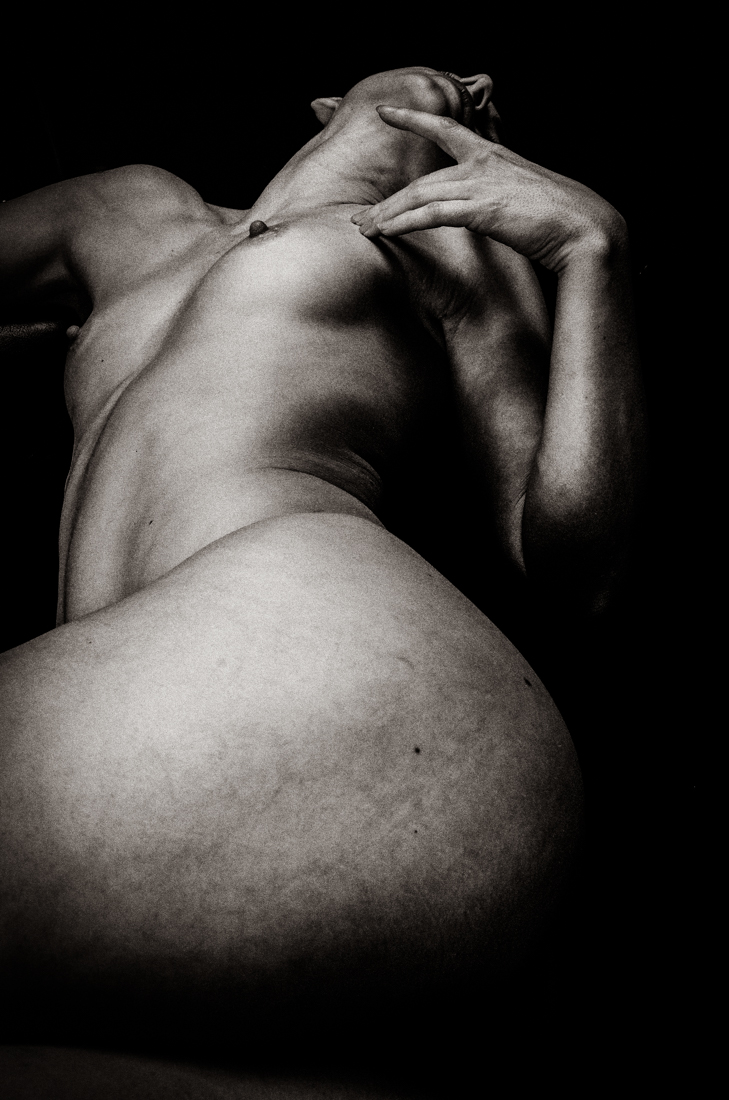
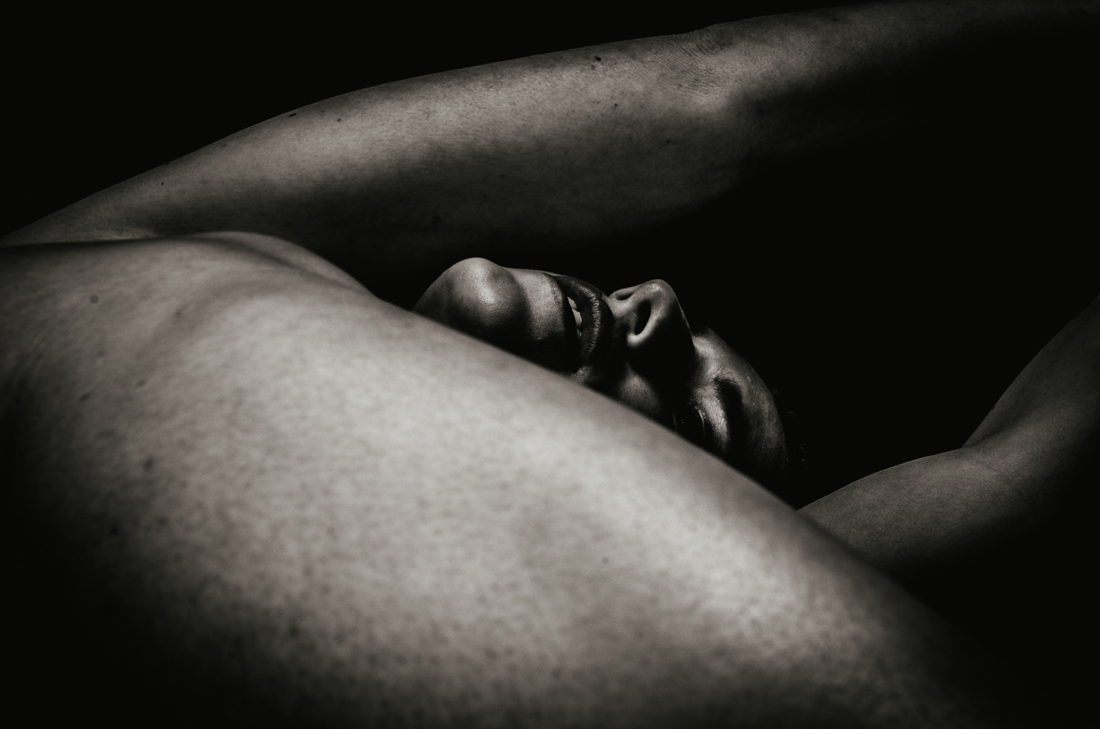
I can't sit still when shooting. It is something that as a professional photographer I had to do because repetition was absolutely needed in my field of work. The moment I started shooting I demanded constant movement from my model as well as myself. I found it hard to find that with shooting from one spot. I tell anyone that I'm photographing "It is your job to pose and my job to find the image." I never wanted to treat a person as still life. I want my images to convey a since of fluidity and emotion and capturing movement is my way of doing it. It becomes an improvised dance where both the I and the model are the lead and follower at the same time.
AUTHOR: eric franklin (United States)
Eric Franklin was born in Philadelphia in the 60's. At the age of 18, after only one year of college, he went on to enlist in the US Navy. His first 12 years was spent between Emergency Care assignments and serving with several US Marine Corps Divisions. After his last tour he went on to become a Medical Photographer for the Navy. Eric retired after serving 22 years of active duty and settled in Virginia, where he currently works for the Federal Government.
Even though his formal education in Photography started in 1993, his passion for photography began as a child but blossomed in college. With a friends Pentex K1000, his first real roll of film shot was a small barn fire right outside the campus. Eric constant shooting, while on deployment with the 2nd Marine Division, caught the attention of the Marine's combat photographer and was offered the position as a back up for him. This is when he was finally introduced to film processing and printing. Three years later he would attend the Navy's Medical Photography school.
As a medical photographer, in the Washington DC area, Eric gained the experience of shooting everything medically related (surgeries, autopsies, patient studies, research, etc...) to crime scenes, portraits of political figures to historic figures. Working in a self sustained lab, he worked with all types of film processing and printing. He would tell you that the most exciting prints he ever made was from the D-Day landing on Omaha Beach from negatives no one ever had printed and only seen by the surgeon who shot them at that time.
Eric began his personal photographic journey after retiring. He would say that his time in the military has had a big influence on his style and subject choice. The influence also came from Ansel Adam's 3 book series with it's out of the box approach to tonal manipulation in film and print. Other influences, such as Araki, Daido, Saudek, Brant, Sieff, Mulder and several others, validated his approach to stepping outside the sharp focus continuous tone methodology he felt constricted to. Supported by his father, a master lithographer, he understood that to make photography his rejection of trends, community acceptance and comfort will be the only way to find his style. "You are going to have to create a lot of crap in order to birth a master piece. Even then, such master piece is only confirming that you have so much more to learn." These are the words from his father that has insured he is his greatest and sternness critic.
He continues to work on several long term projects including The Black Box, Knots and Parts (Rope Bondage), UV/IR (not titled) and several others. He has placed in several international contest as well a participated in a group showing with M.A.D.S. The ultimate goal is for him to find the most difficult way to create something simple, intriguing, maybe even controversial and enjoy life.
SHARE
Support this photographer - share this work on Facebook.