TITLE: Cryosphere Chronicles: Once Upon A Time In Sagarmatha Sky Glaciers
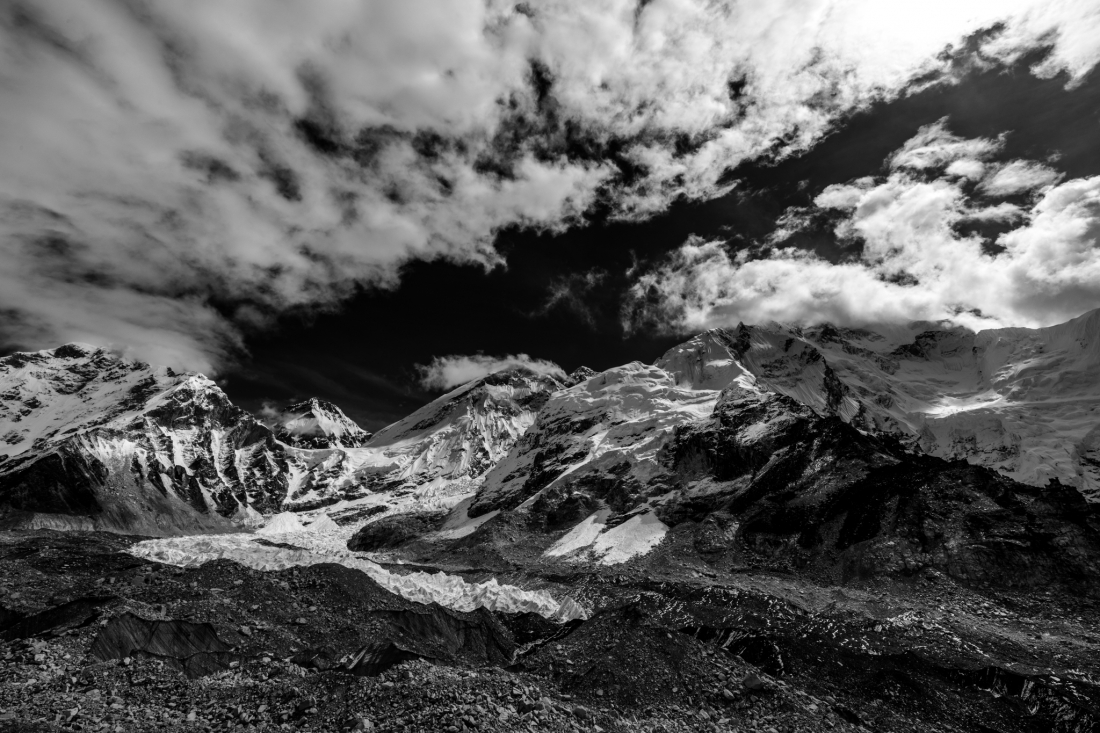
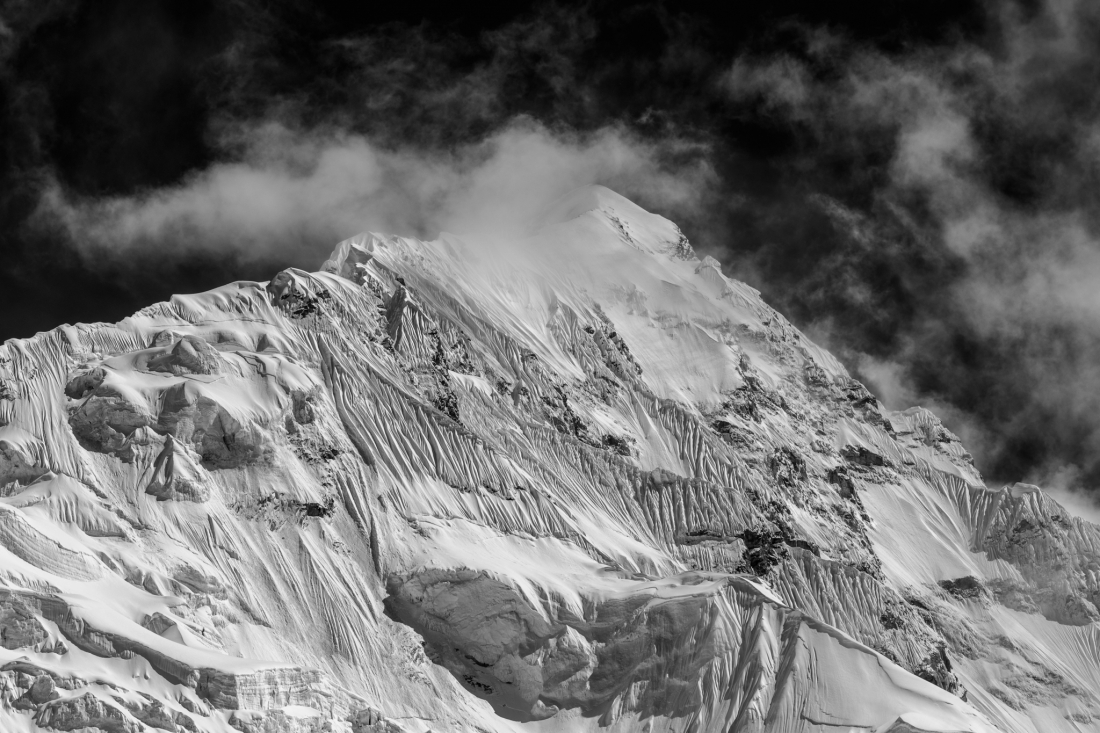
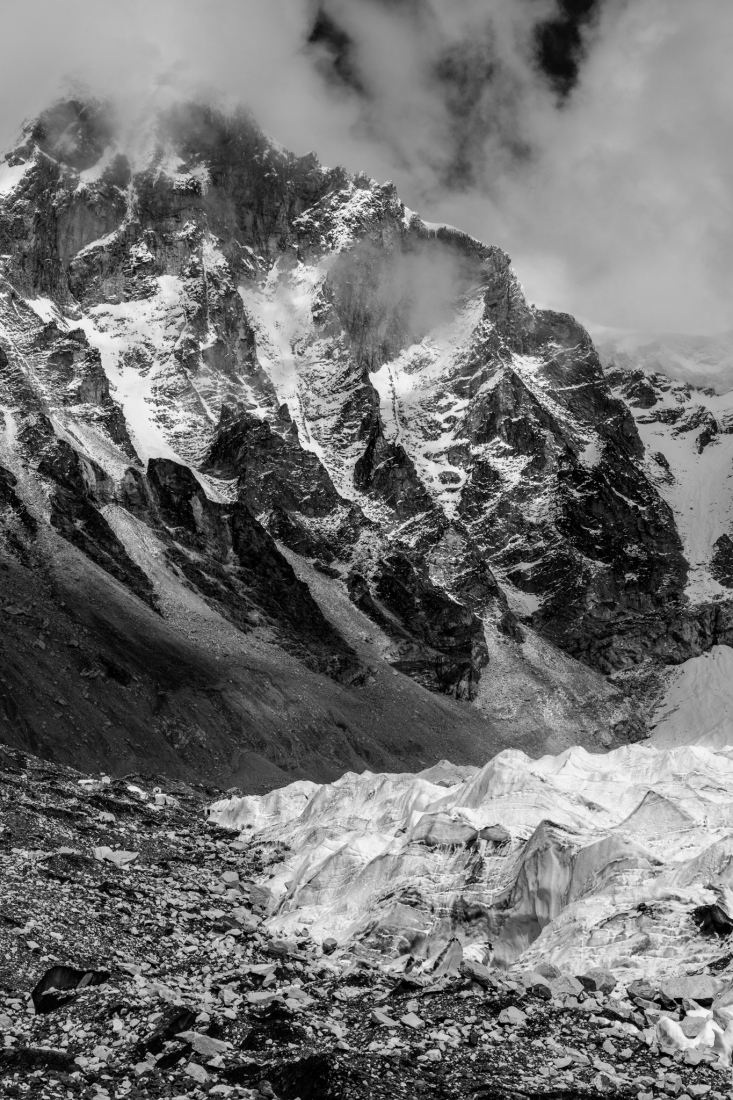
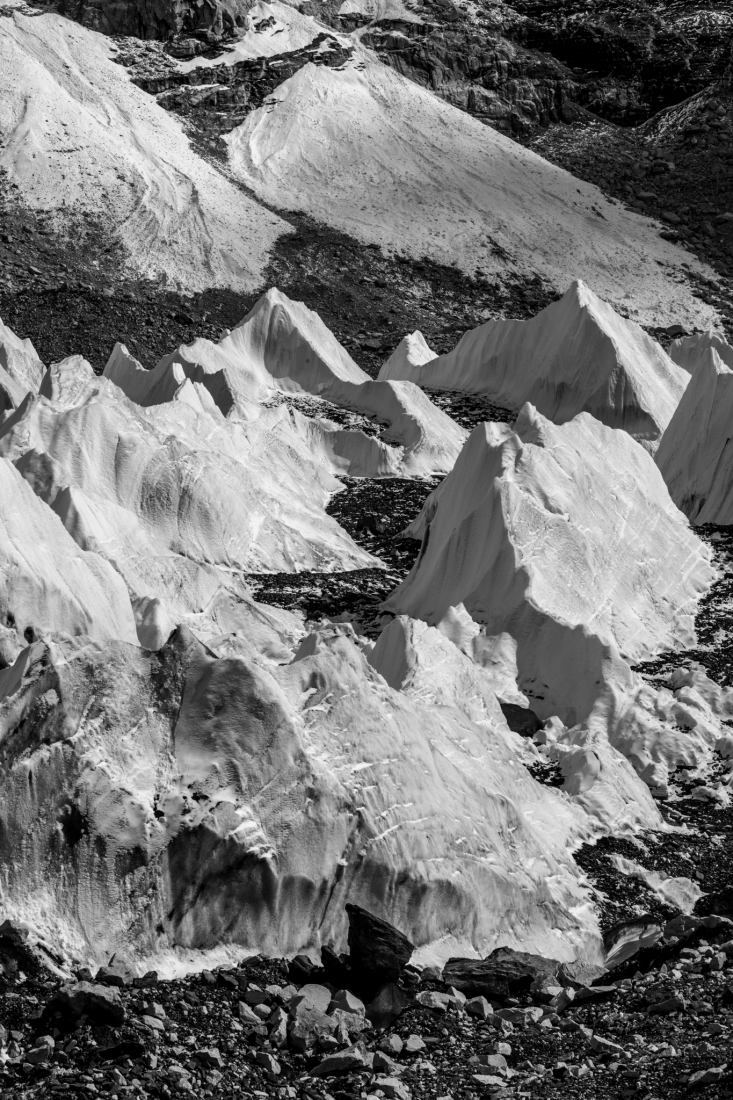
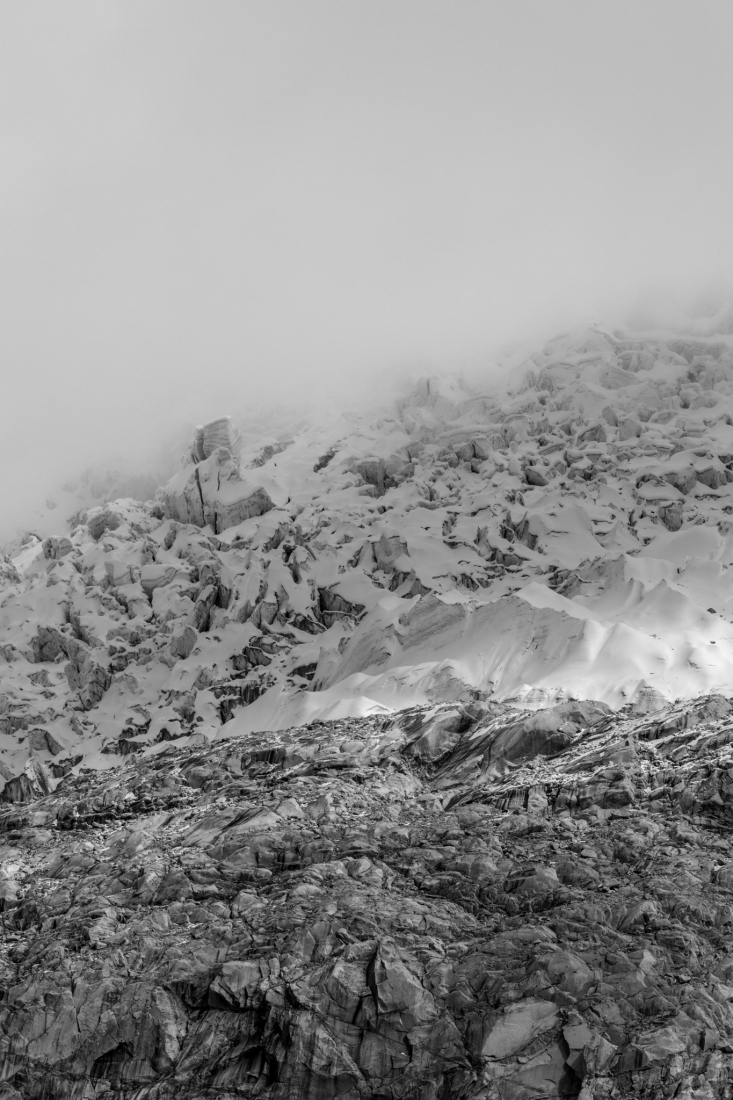
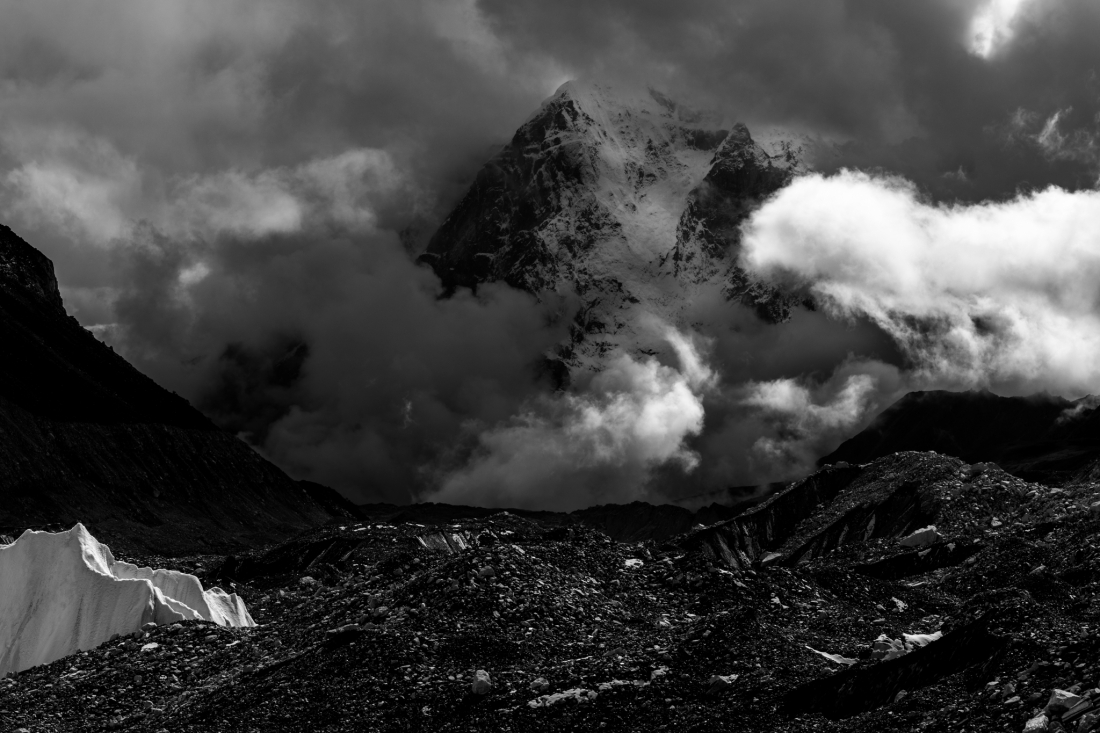
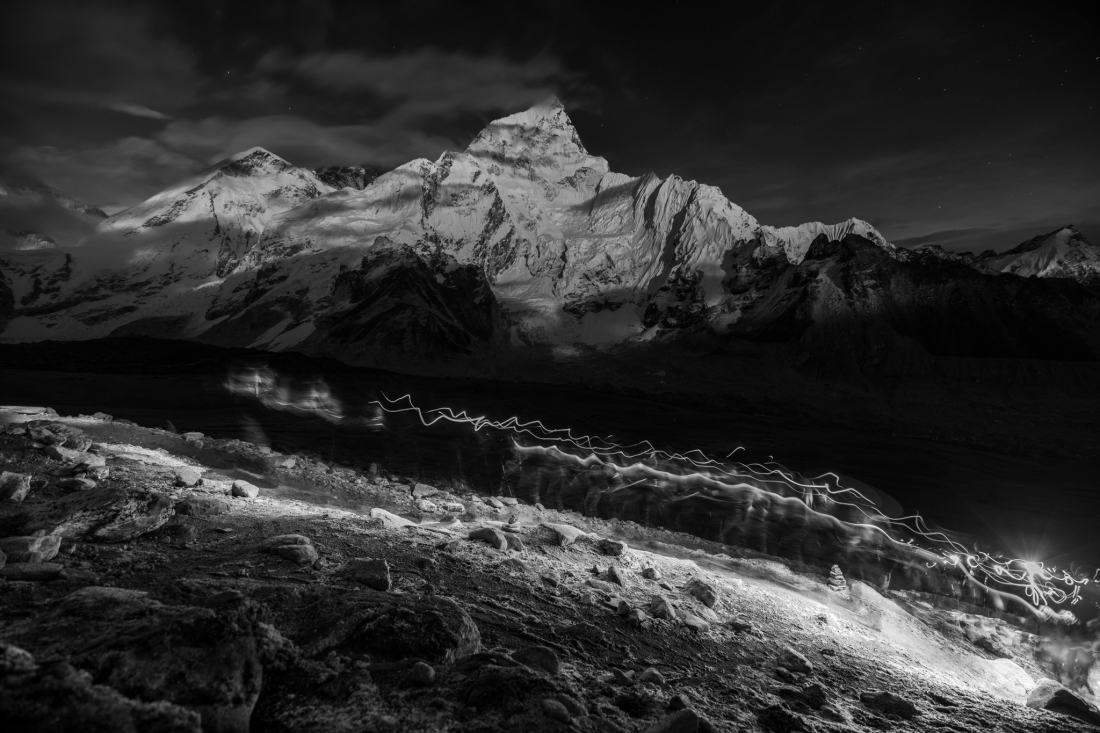
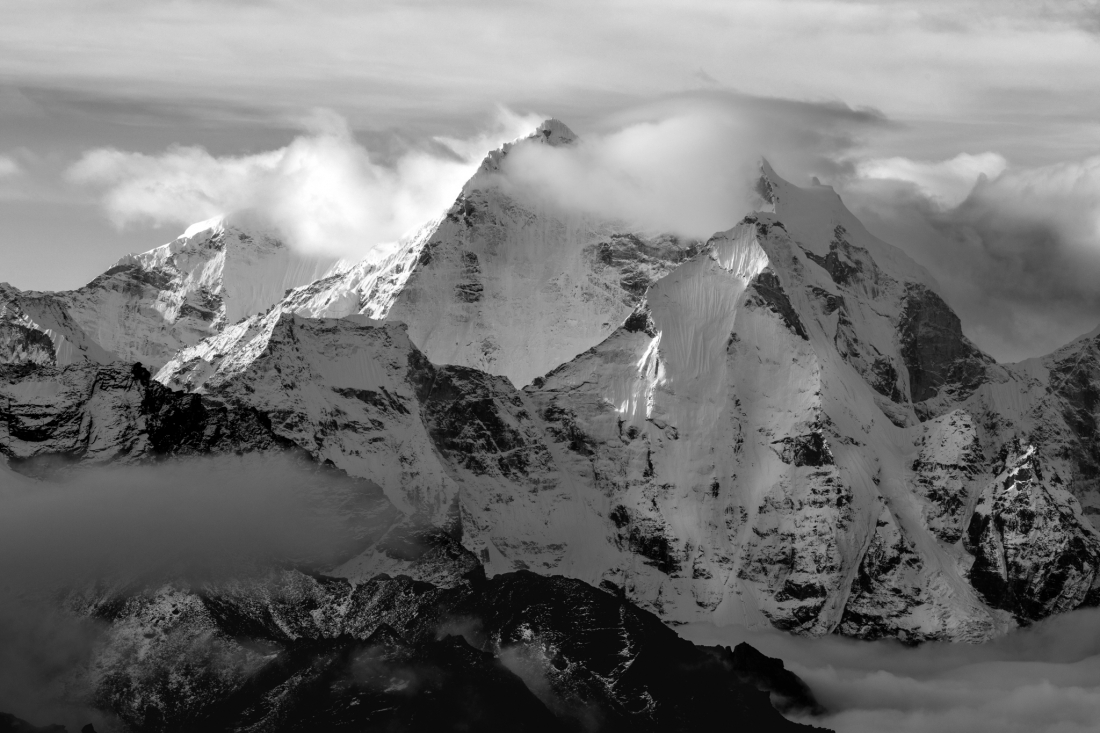
The continual movement of ice means images can never be repeated. Glaciers, once gone, will never be their original form again. And so, to photograph these masses of ice is to capture a generation of glaciers that only we will witness. This is why I feel drawn to document them in a timeless manner devoid of colour, only shapes, lines, shadow, and light. This is part of an ongoing series documenting Earth’s ice-and-snow-covered regions called Cryosphere Chronicles: Our Generation of Ice
The great Asiatic mountain chains, such as the Himalayas, are home to some of the largest glaciers outside the polar regions. These glaciers constitute a water resource relied upon by an estimated 500 million people who inhabit the basins of the Indus, Ganges and Brahmaputra rivers.
However, mountain glacier systems are decreasing en mass worldwide due to the warming effects of climate change. This is also apparent at extreme altitudes, including the upper reaches of Sagmartha National Park, located in the Solu-Khumbu district of Nepal, and home to Sagmartha (Mount Everest: 8,848 metres), Earth’s tallest mountain.
While high-altitude climbing tourism garners the most attention from this region internationally, the mountains are also home to many significant glaciers that are the source of river systems serving the vast Himalayan region. A large concentration of glaciers is in a strong regression in this area. Major glaciers in the Sagmartha National Park are Khumbu, Imja, Ngozumpa and Nangpa, and nearly all the 29 glaciers (aside from one) are “black glaciers”, also known as “D-type”, or debris-covered glaciers.
The world’s highest glacier is perched high on Mount Everest, South Col Glacier (8,020 metres), with evidence pointing to its rapid retreat.
These images of mountain glaciers are a reminder that they will never be the same again.
Copyright frasermorton.com
@frasermorton__(IG)
AUTHOR: Fraser Morton (United Kingdom)
Fraser Morton is a Scottish independent mixed-media documentary filmmaker, photographer, writer and author. His work explores the relationship between human and environmental health. Current projects focus on the cryosphere, epilepsy and the future.
His work has been widely published, screened, exhibited and featured in international media over his 15-year career, including National Geographic, CNN, Bloomberg, Scotsman, Vice, and BBC, to name a few.
He has travelled to all seven continents on assignment. His Antarctica, Arctic photography and climate films have been exhibited at the ArtScience Museum and Botanical Gardens of Singapore. His film A Life Electric was selected at the Breaking Through The Lens Programme at the International Cannes Film Festival, and other environmental films were selected as finalists at the Jackson Wild Media Awards (USA) and Adventure Uncovered Film Festival in Environmental Spotlight Award & New Talent Award (UK).
He has had RED and Sony camera partnerships and is a 2041 climate change ambassador and SUDEP Action epilepsy charity campaigner. He is a former ESPN & Fox International staff journalist, published ghostwriter, and media educator.
Website: frasermorton.com
@frasermorton__(IG)
SHARE
Support this photographer - share this work on Facebook.