TITLE: Appalachian Scarecrows
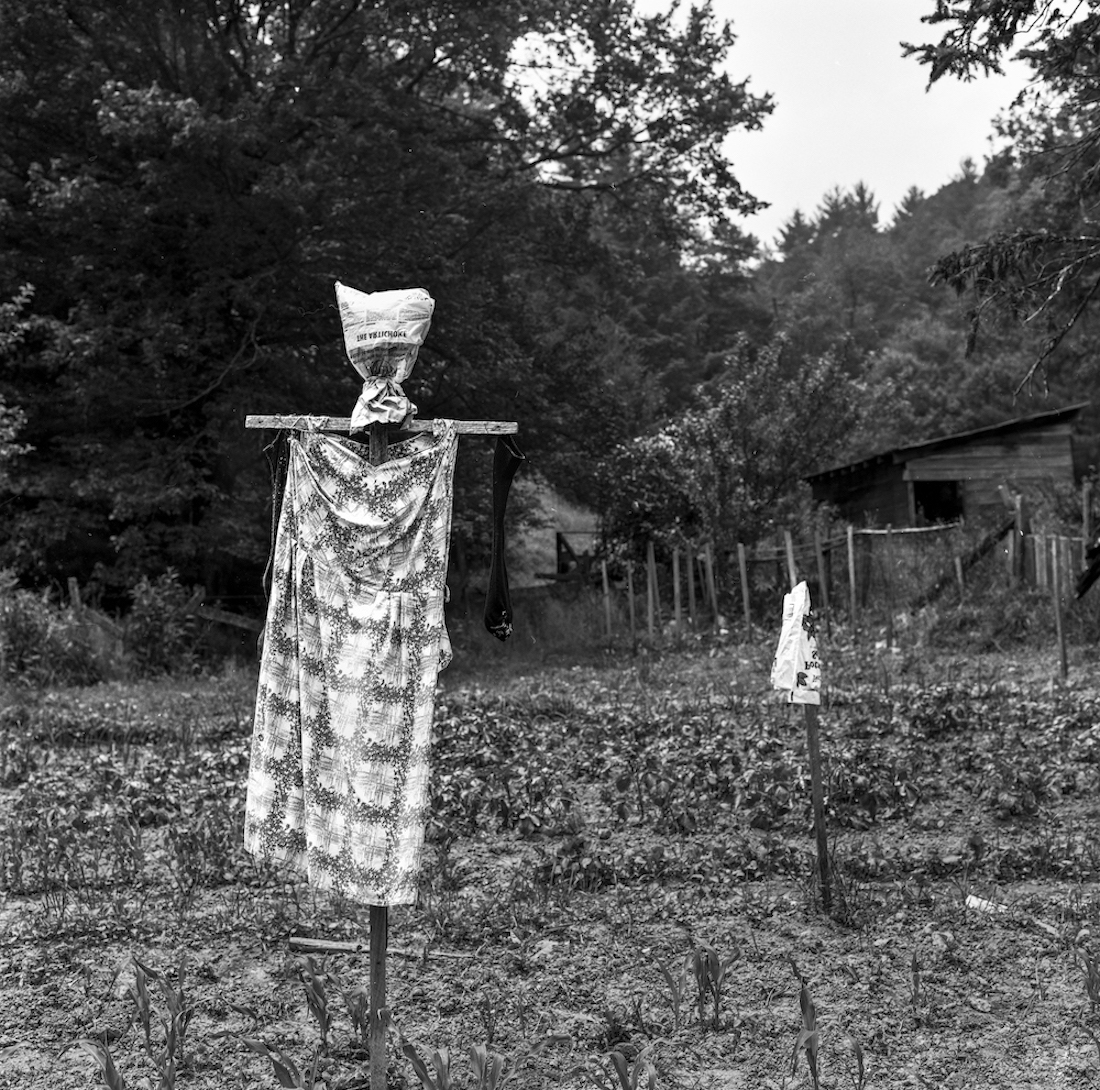
Fifty years ago, when I arrived in the Appalachian Mountains of North Carolina as a student in early childhood education, I was deeply enchanted with the landscape. I would go into the hills to learn about the indigenous plants, and I would also spend time with the people who lived there. In early spring, a seed was planted, a garden began, and vegetables became visible to provide food for the family in the early fall. As the plants grew, miraculously a scarecrow would appear in handmade form as part of their world.
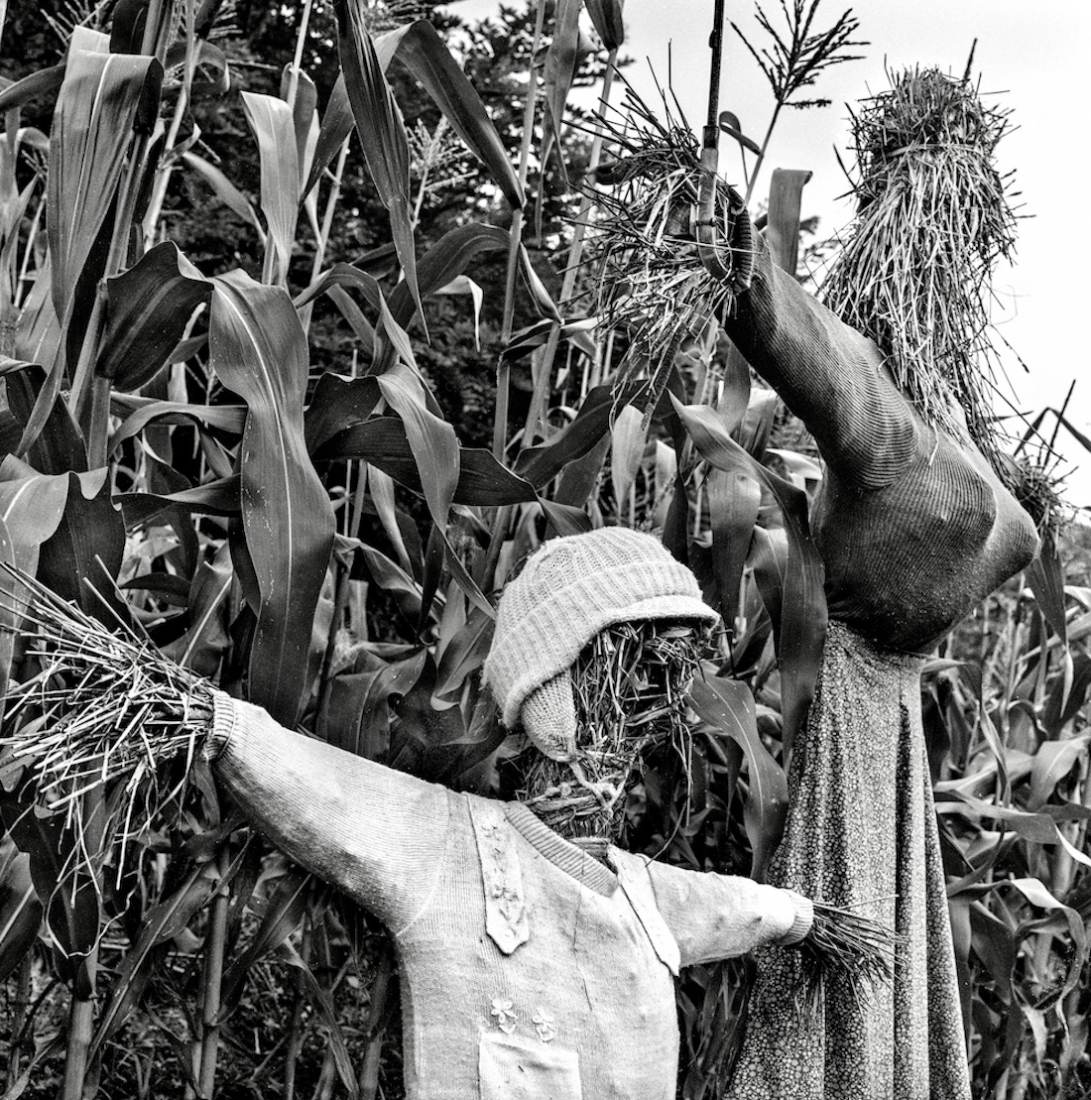
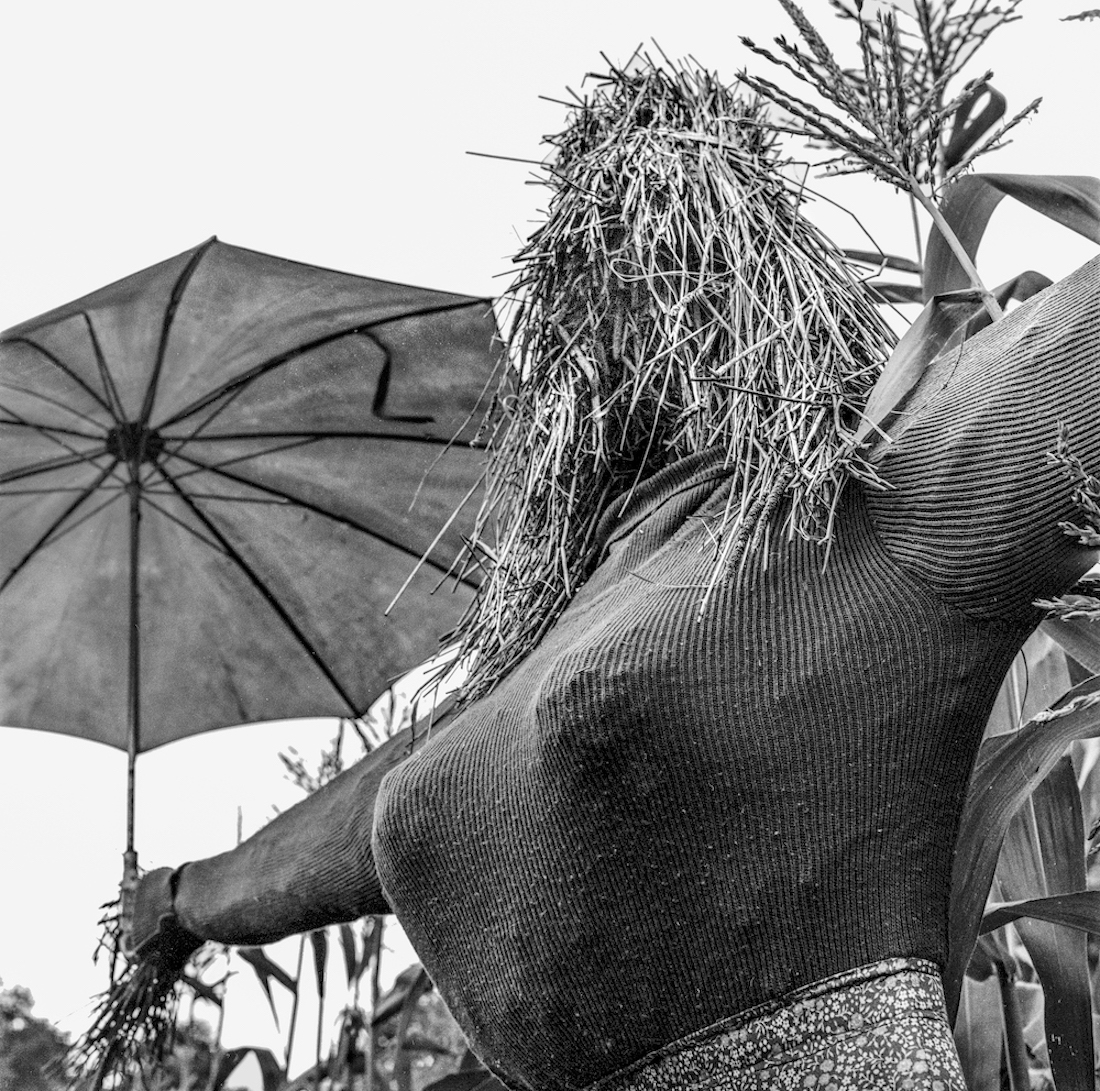
From the scarecrows’ physical manifestation, invisible stories arose for me. Some stood alone while others were grouped in a family, with a mother and child and a father holding his son’s hand. Had this family made the scarecrows in their own image? Whose tattered garments had been chosen to clothe the scarecrows, and why? In remote Appalachia, art making was thriving in its most basic form.
Scarecrows have been around almost as long as civilization itself. In ancient Egypt, farmers protected their wheat fields from quail, and the Greeks scared birds away from their vineyards with carved wooden statues. Both Native Americans and medieval Britons used human beings to shout birds away from their crops. In Appalachia I witnessed this late 20th century version of history manifest itself in the gentlest of ways. People there found a peaceful solution to a basic conflict between humans and nature.
A decade later, while living in Raleigh, I returned to fix these impressions on film. In this submission, I have produced eight of the scarecrow images. All suggest the intertwining of humans and the landscape they inhabit. Together they create a picture of a way of life, crafted by culture and striking a fair balance between people and their environment.
AUTHOR: Sadie Bridger (United States)
My name is Sadie Bridger - artist, mother, daughter, wife, Caucasian, MFA graduate, Southerner, and resident of New York City.
The moment we name objects and individuals, perceptions arise. And boundaries follow, divisions that are entirely dependent upon the mind that creates them. Over time, these self-made gulfs enlarge and deepen, and the designations we use become increasingly rigid.
Coming of age in the rural South in the 1950s and 1960s, I observed vast gulfs between blacks and whites, females and males, between the environment and humans, all existing side-by-side, together yet apart, lockstep in silence. These separations made me uncomfortable, and I never understood why we could not go inside each other’s world – go beyond the trivial, the mundane and the self.
Visual art became the medium through which I began to explore these themes and to question the dichotomies I perceived. Gulfs not only between the races, genders and the outside world, but within the genders, too, and between citizens of the North and South, between the educated and uneducated, the privileged and the poor, among the various classes and religions. Divisions between young and old, artist and viewer, separations society seemed to accept without question.
In my art, I explore both the gaps that separate one from another and how we might bridge those gaps and come to a deeper, more intimate understanding of one another. The common theme has been the superficial appearance of difference and the profound existence of common ground, connection and unity.
SHARE
Support this photographer - share this work on Facebook.