TITLE: Dhaka, the ritual of chaos
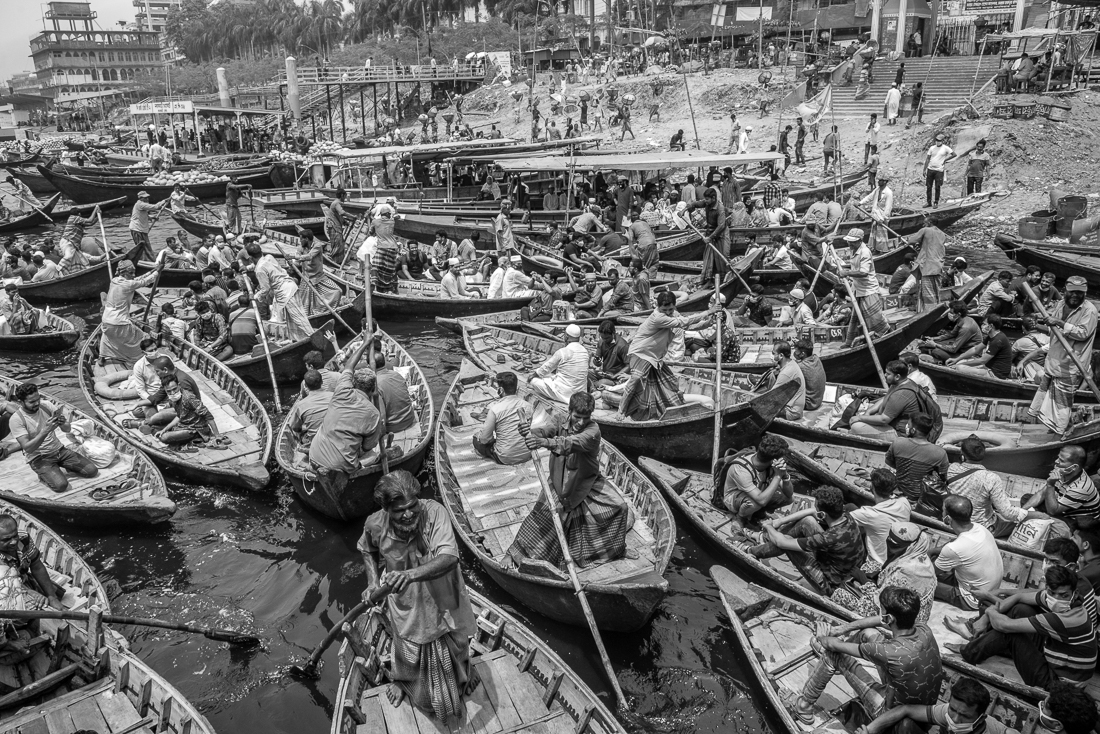
The recommendations issued by international health organizations for the prevention of the COVID19 pandemic turned out to be the reflection of a privilege that a large part of the world could not afford. In Dhaka, the capital of Bangladesh, one of the most densely populated countries in the world, these measures proved to be ineffective.
Social distancing, lockdown, and other preventive measures prove very difficult to accomplish in a country in which three-quarters of the 168 million inhabitants live in conditions of poverty and overcrowding. According to the latest Labor Force Survey from the Bangladesh Bureau of Statistics (BBS), 85% of the economically active population is informally employed, without social security, and surviving on wages that barely allow them to survive. The median income for a family of 4 is between 3 and 4 USD a day to cover most of their expenses.
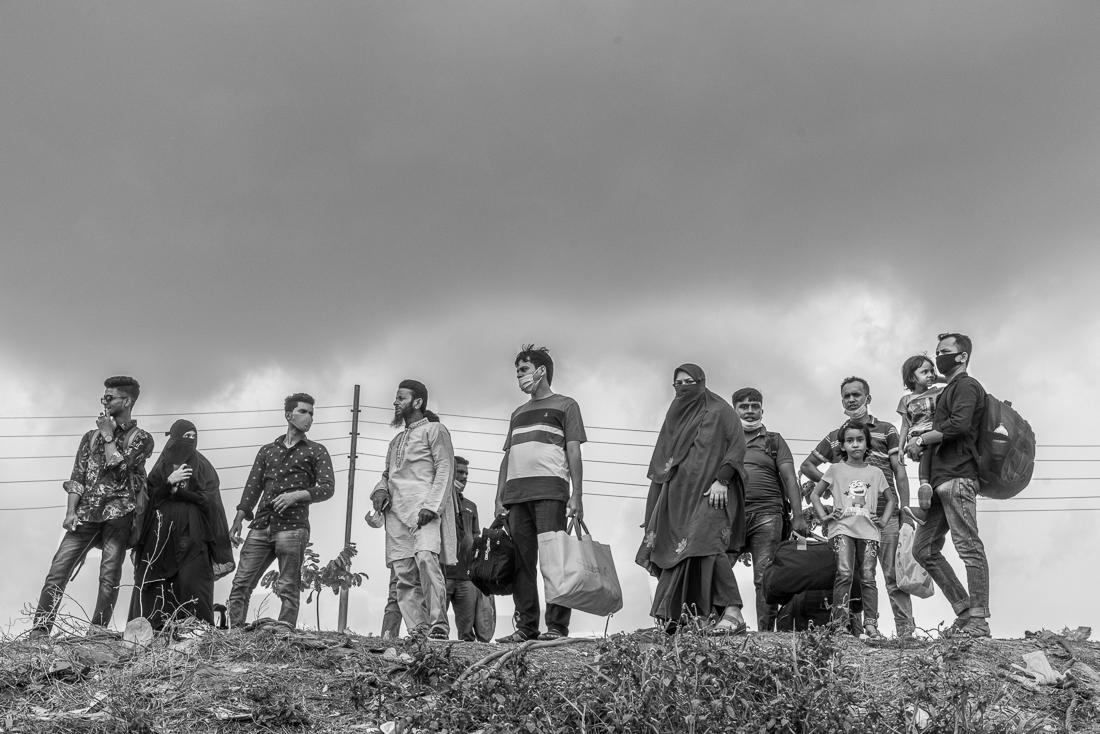
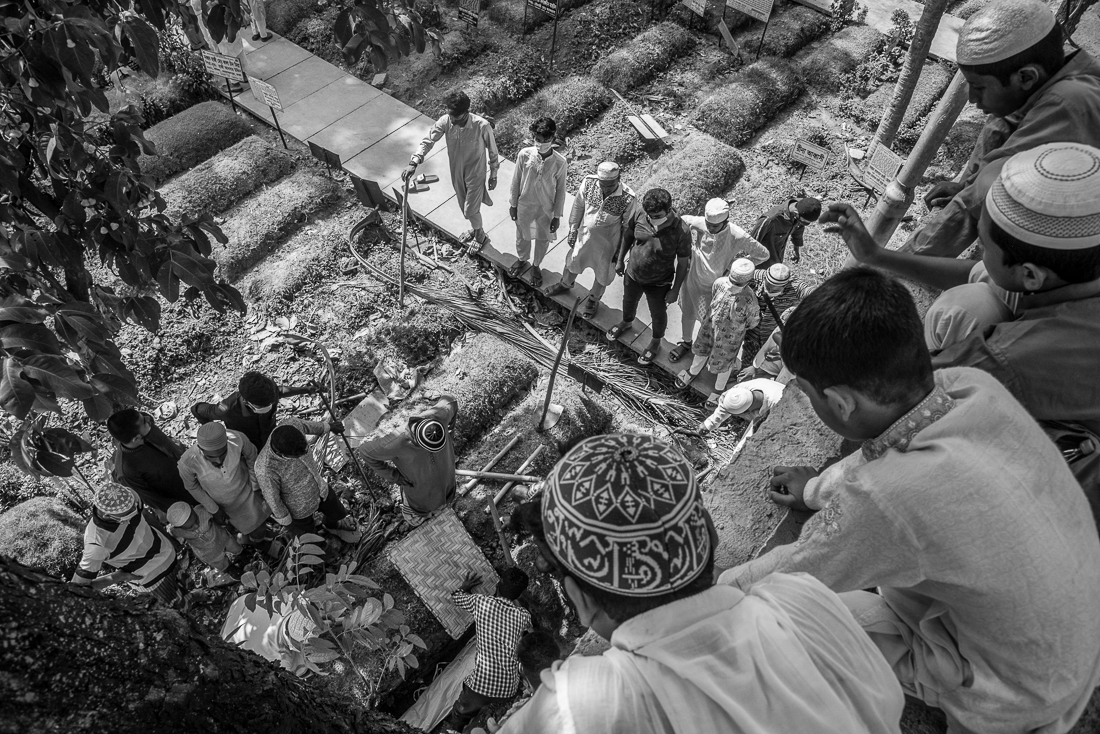
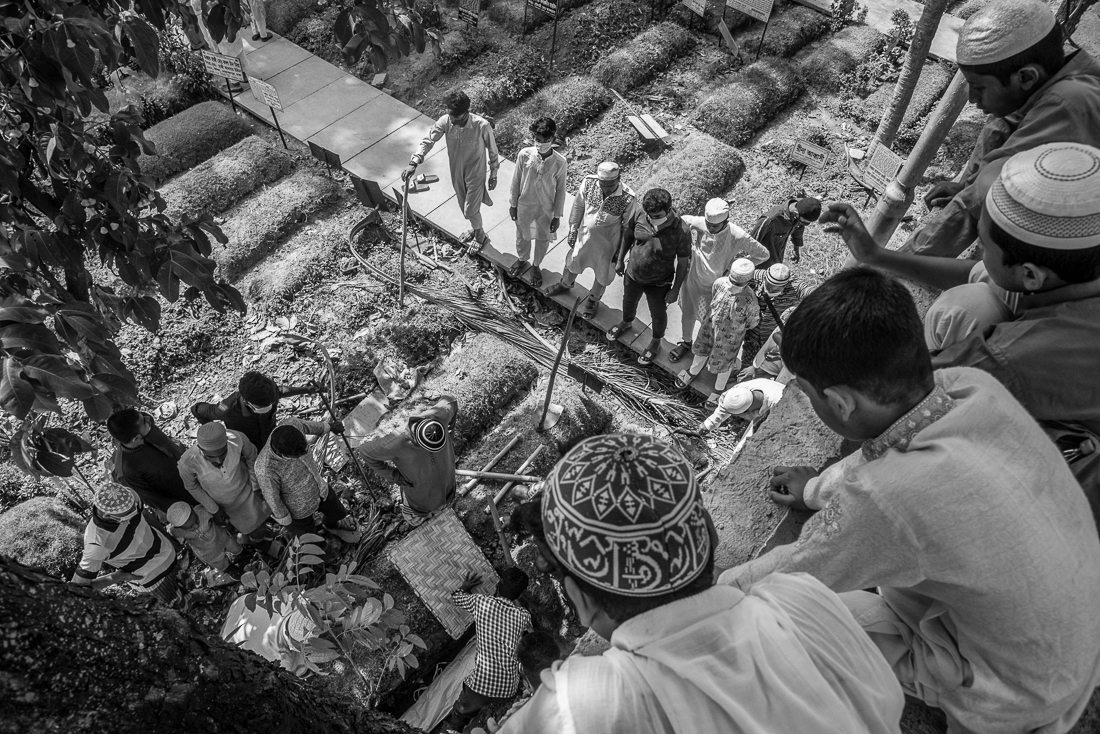
When the government declared a national lockdown, staying home was impossible for millions because observing this norm meant to die of starvation, not being able to bring food home, or to pay rent. Thousands lost their jobs, prompting a massive return from the city to the provinces of the country where they came from. Despite this, Dhaka did not stop and the usual chaos of the city continued during the pandemic: hospitals and cemeteries could not cope.
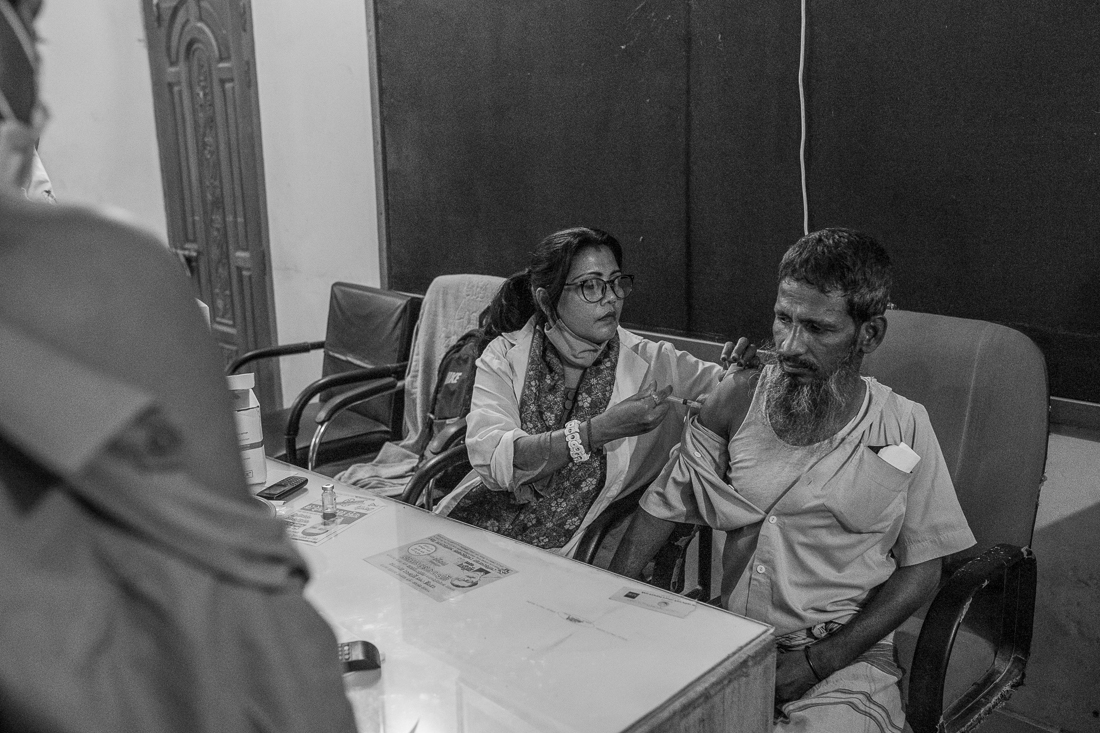
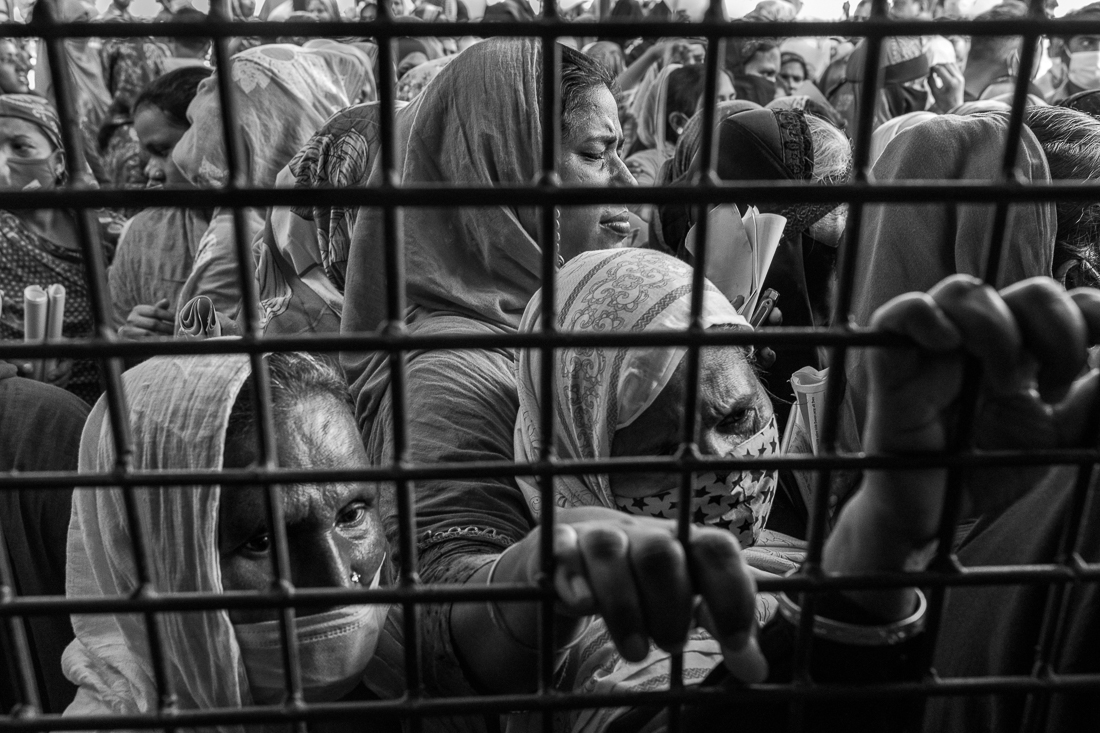
The same thing happened with the vaccination campaign; the shortage and weakness of the public health system made vaccination a big struggle for the population. Thousands of men and women formed long queues in adverse weather conditions and improvised places with extremely poor care for the administration of vaccines. As of December 2021, around 70% of the adult population has not received the two compulsory doses of the vaccine.
AUTHOR: Israel Fuguemann (Mexico)
Professionally trained at the School of Journalism Carlos Septién García and at the Active School of Photography (both schools in Mexico City), Israel Fuguemann is journalist and documentary photographer. In the last years his work focused on social and environmental themes, specially documenting people and cultures in resistance, and the always more extensive reality of extractivism of raw materials (mining, oil extraction, logging and deforestation) He was co-founder and editor of the journal Spleen Journal, Cruel and Dreamy Journalism (a collective Latin American journalistic project). He got a grant to work at the Journalistic Clinic of the Mexican newspaper El Universal. He has also worked as a freelance journalist and photographer for several newspapers and magazines (Proceso, Cuartoscuro, Altäir Magazine, Vice México, Lento Magazine, among others). He won the Latin-American contest of documentary photography 2019 A handful of earth of Cuartoscuro photojournalism magazine. He was the finalist of the Alexis Grant Foundation 2020. Selected finalist in The Guardian Project 2021 for Documentary Photographers and Photojournalists by Lucie Foundation. Finalist of the 2020 Latin American Documentary Photography Contest, "Work and Days". He won an artistic residence (Me Sobra Barrio 2019) in The Image Center in Mexico City, the most important photography gallery in Mexico. In 2021 he made the still photography of the documentary "Letters at a distance" directed by Juan Carlos Rulfo. He has exhibited his photographic work collectively at the Soumaya Museum (Mexico City), The Memory Museum (in Tlaxcala, Mexico), the French Federation by UNESCO (in Paris), among others.
SHARE
Support this photographer - share this work on Facebook.