TITLE: Palm oil production in the Central African Republic
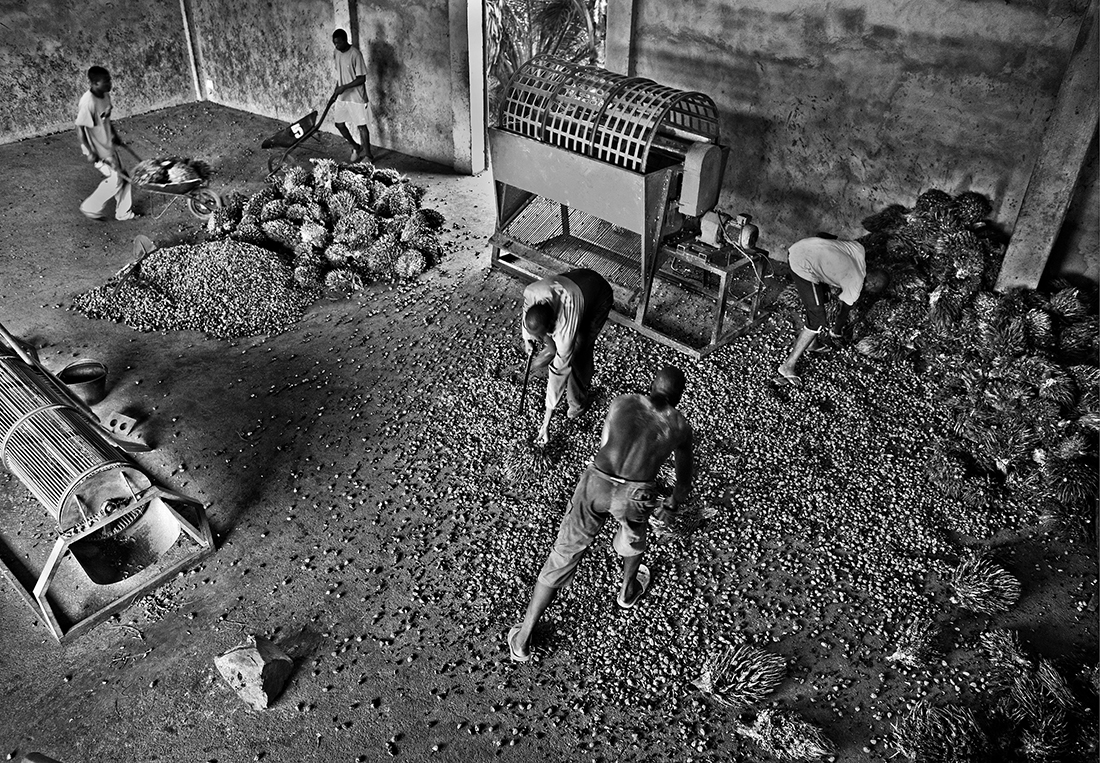
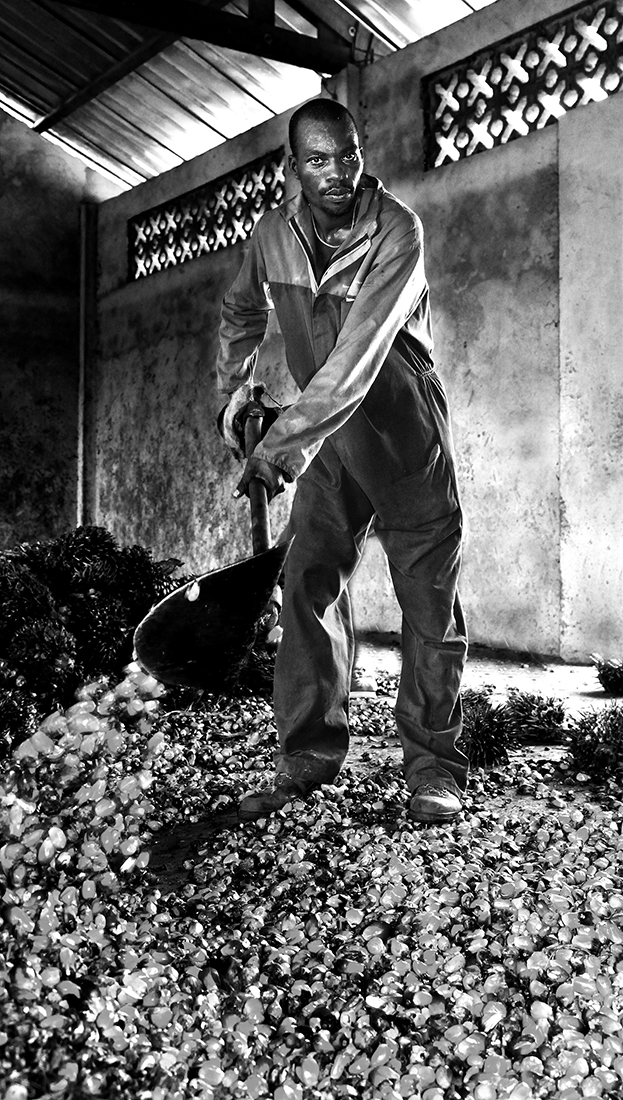
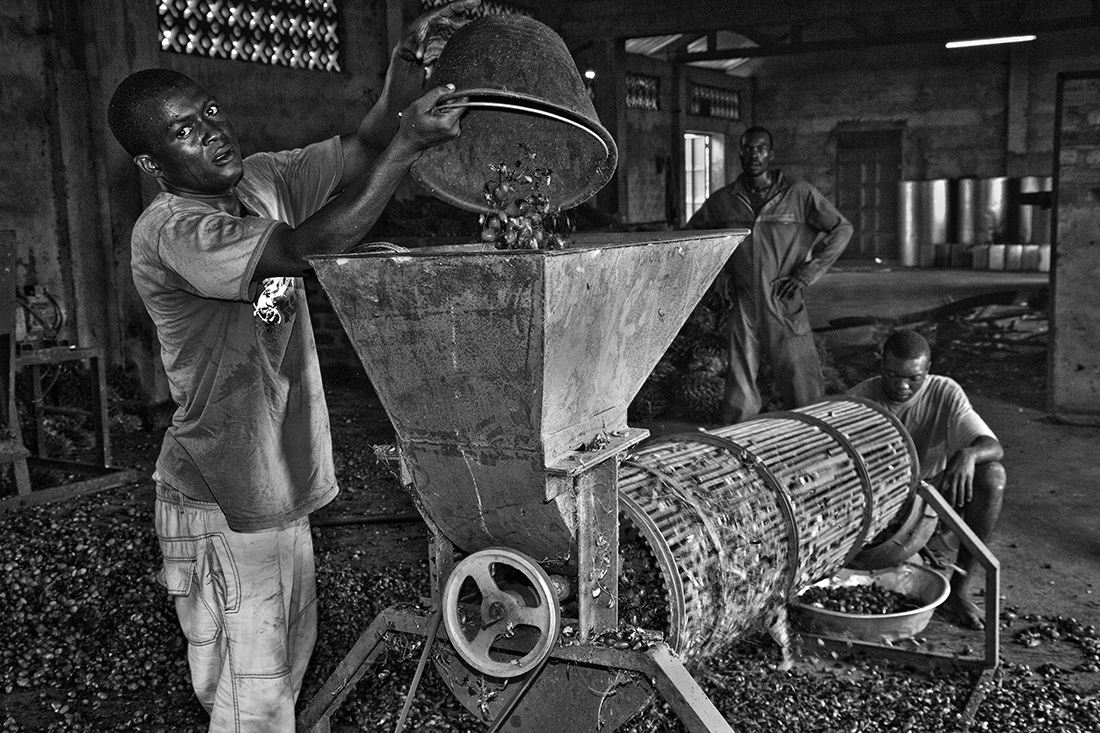
Each plant produces several clusters of dates which, black when unripe, turn orange red at the end of ripening. They are then collected and processed with an almost completely manual process to produce a reddish and viscous oil with an intense flavor. Today rudimentary machines are used but for part of the work the favorite tool remains the machete.After cleaning, the dates are steamed in a large tank until they soften and begin to exude oil. Subsequently a screw press squeezes the pulp producing crude oil which is collected in a basin. The proceeds are then poured into a second boiler and cooked for hours with a little water. During this process the crude oil cleans itself of the heavier impurities that remain at the bottom of the container. Water is then added, causing stratification, until the lighter layer of oil is pushed to a tap placed on the side of the boiler. The finished product is thus percolated and collected inside a metal drum. The work of the workers gives life and charm to the scene. They move quickly and safely between the vapors and flames of the wood fires lit under the boilers, between the deafening noise of the machines and the fumes that envelop the work environment. The temperature is close to fifty degrees and I too, while I take them back, live with them this sweat-drenched effort as if I were immersed in water. What gives body to the scene and paints it in strong colors are their gestures, so quick and aware, in rhythm with the machines, the scarcity of light in certain points that contrasts with other violent lights nearby, the sweat that due to the temperature and the fatigue flows copiously on the half-naked faces and bodies...
AUTHOR: GiBi Peluffo (Italy)
GiBi Peluffo was born in Savona in 1950. He worked for almost 25 years in the photographic factory in Ferrania as a researcher of organic chemicals.In those years he participated in national and international photographic competitions where he received more than 50 awards. 30 times the juries have recognized him as the best author overall.He then obtained, in 1997, the highest recognition with the consecration as Master of Italian Photography (today the only one in Liguria).Since 2003 he has collaborated with "EMERGENCY" for which he produced a reportage in Sierra Leone on the Goderich hospital and in 2004 in Cambodia where he produced another work on the country and on the "Ilaria Alpi" surgical center where the victims of mines are hospitalized. anti-personnel. In 2005 he traveled to Belarus and Moldova as a photojournalist and ambassador of peace for Unicef and the civil protection of the principality of Seborga and for the "Forum for the rights of children in Chernobyl". In 2009, Emergency again sent him to Sudan and Central African Republic for a report on pediatric cardiac surgery. In 2010, 2011 and 2013 he returned to Central Africa as a photojournalist for the Discalced Carmelites of the Infant Jesus of Prague...
SHARE
Support this photographer - share this work on Facebook.