TITLE: Felicific Calculus: Technology as a Social Marker of Race, Class, & Economics in Rochester, NY
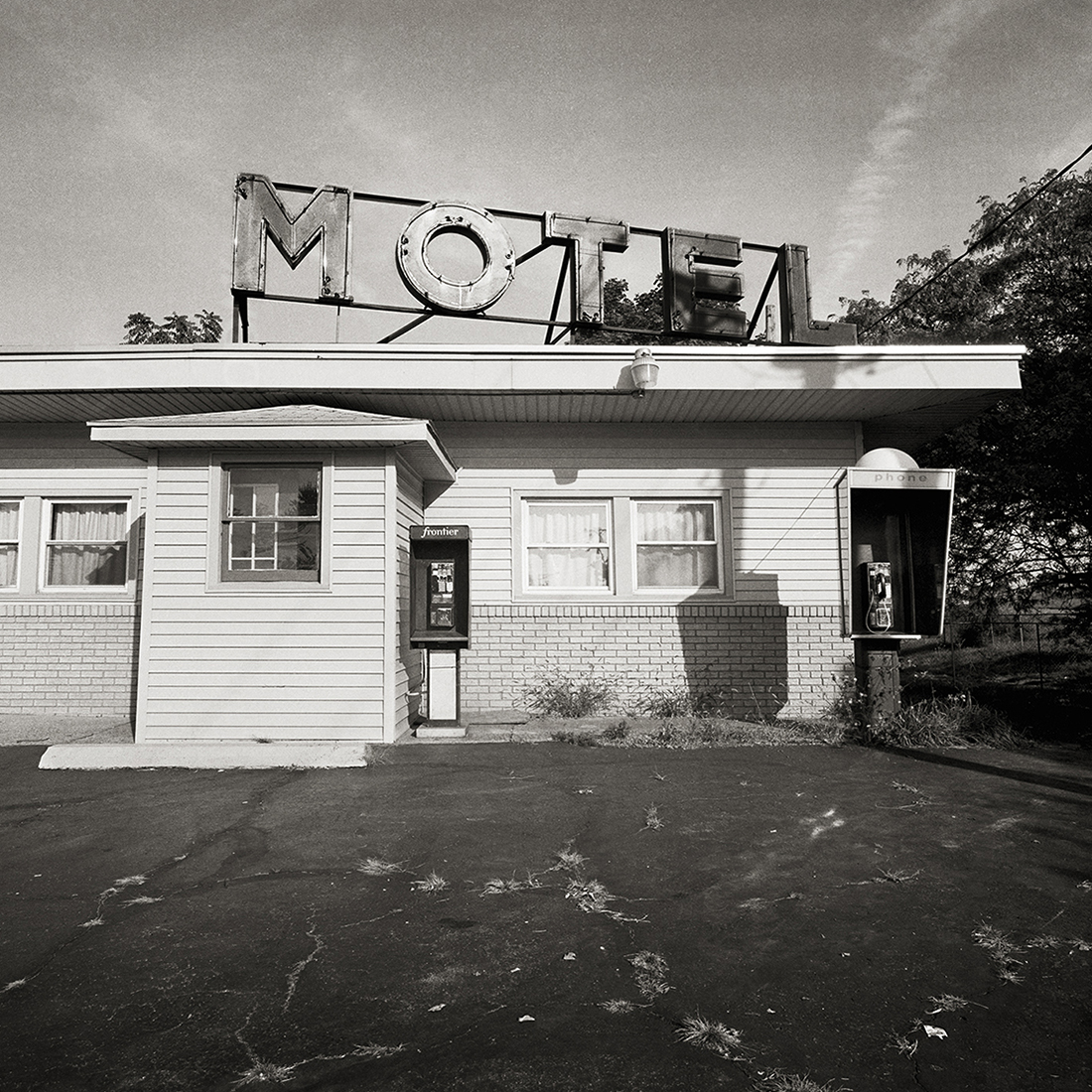
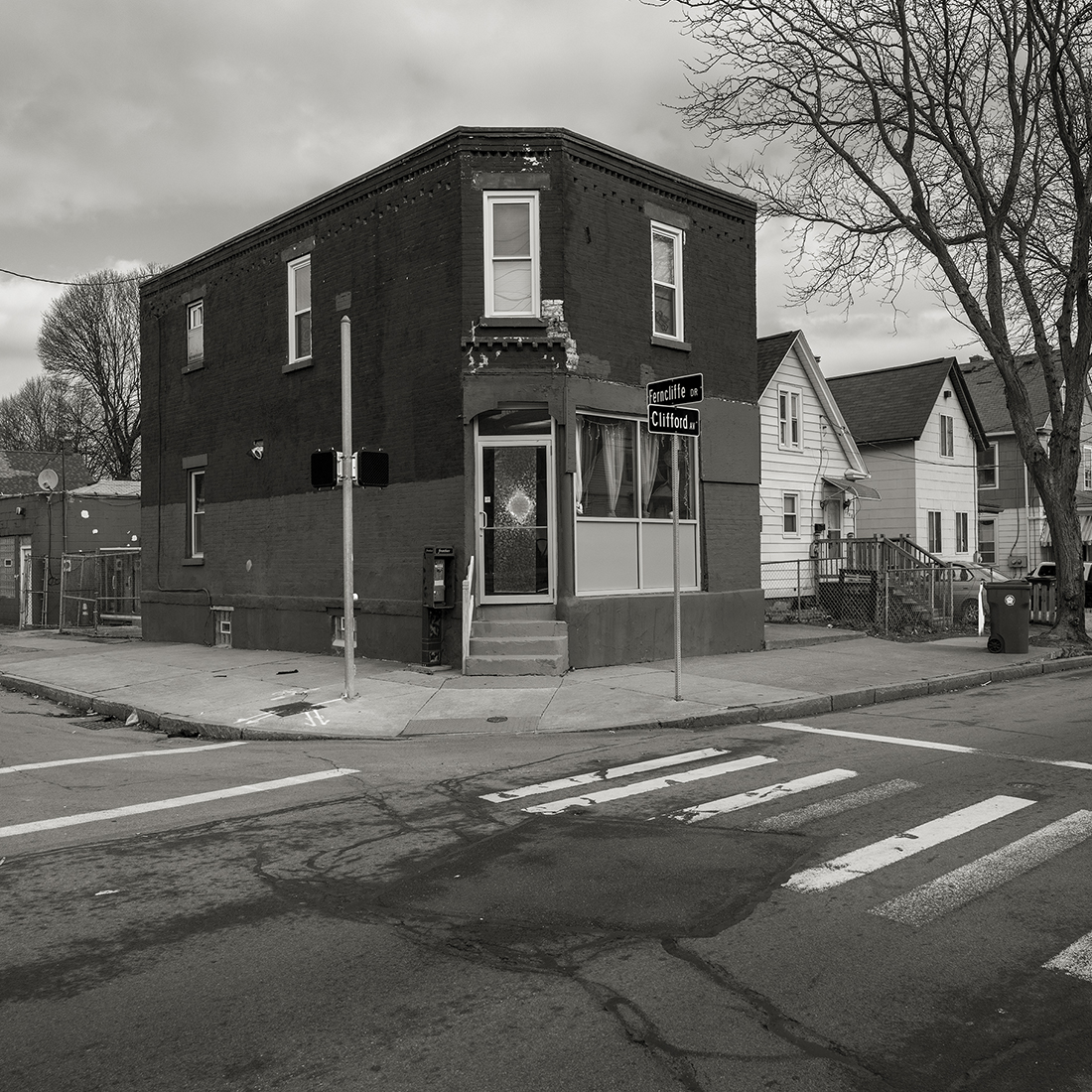
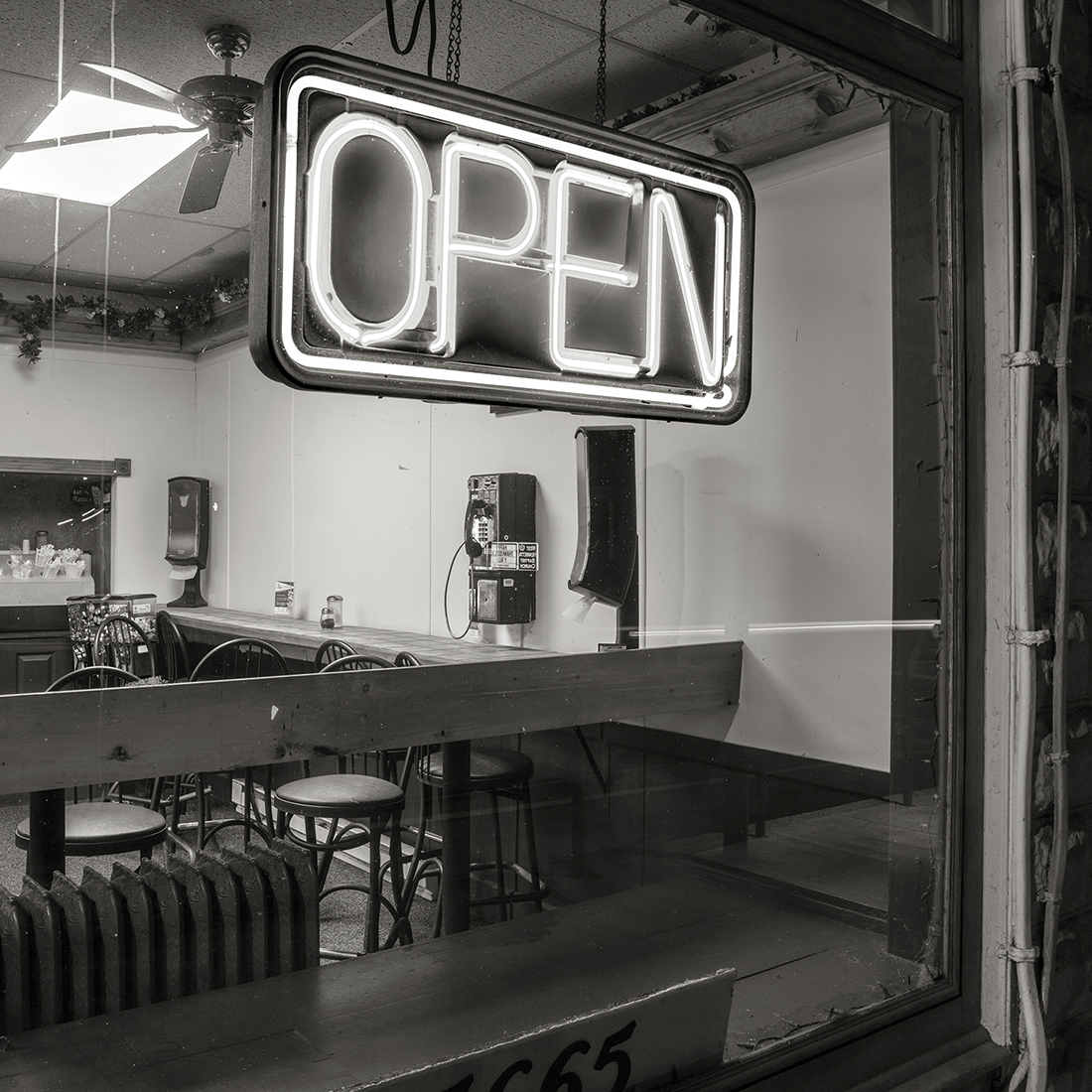
In 2017, I relocated my studio to a different part of Rochester, NY. Colleagues immediately started making comments along the lines of: “...that area's a war zone.” My experience with the new neighborhood was positive, so I wanted to discover what visual cues others might be seeing as indicators of a dangerous environment. Several people had mentioned the number of payphones in the area, inferring that only criminals use payphones these days.
There really were a lot of payphones in my neighborhood. I began documenting them, and quickly saw that far from being used by criminals, these phones served as a lifeline for some of the poorest residents in the area.
Looking deeper, I found the story behind Rochester's payphones reflected an unusually altruistic 'felicific calculus' by Frontier Communications. Instead of focusing on profits, they had decided to maintain the payphones in poorer neighborhoods for the good of the community.
Many policymakers have opted to view payphones as a social indicator of crime, unfortunately leading to ignorant or even dangerous decisions.
Witnessing that type of reflexive judgement from my colleagues drove me to educate myself. I photographed payphones and mapped their locations, then overlaid them with census maps showing economic status, ethnicity, age and sex, and the city crime map. There was an immediate, direct correlation between the poverty level and location of the payphones. Areas with the most payphones coincided with Rochester neighborhoods where the average family incomes are lower than $20,000 annually. There was also no correlation with high crime neighborhoods.
Through Felicific Calculus I hope to challenge negative perceptions of social markers that conflate poverty with crime. Though they are relics to most of us, payphones remain important for residents trapped in lower economic circumstances.
AUTHOR: Eric Kunsman (United States)
Eric T. Kunsman (b. 1975) was born and raised in Bethlehem, Pennsylvania. While in high school, he was heavily influenced by the death of the steel industry and its place in American history. The exposure to the work of Walker Evans during this time hooked Eric onto photography. Eric had the privilege to study under Lou Draper, who became Eric’s most formative mentor. He credits Lou with influencing his approach as an educator, photographer, and contributing human being.
Currently, he is a photographer and book artist based out of Rochester, New York. Eric works at the Rochester Institute of Technology (RIT) as an Assistant Professor for the Visual Communications Studies Department at the National Technical Institute for the Deaf and the School of Photographic Arts & Sciences.
In addition to lectures, he provides workshops on topics including his artistic practice, digital printing, and digital workflow processes. He also provides industry seminars for the highly regarded Printing Applications Lab at RIT. His photographs and books are exhibited internationally and are in several collections. He currently owns Booksmart Studio, which is a fine art digital printing studio, specializing in numerous techniques and services for photographers and book artists on a collaborative basis.
Eric holds his MFA in Book Arts/Printmaking from The University of the Arts in Philadelphia and holds an MS in Electronic Publishing/Graphic Arts Media, BS in Biomedical Photography, BFA in Fine Art photography all from the Rochester Institute of Technology in Rochester, New York.
There's no “given,” formula for what demands Eric’s focus as a photographer. Eric is as drawn to the landscapes and neglected towns of the American southwest as he is to the tensions of struggling rustbelt cities in the U.S. northeast. Always Eric is attracted to objects left behind, especially those that hint at a unique human narrative, a story waiting to be told. Eric’s current work explores one of those relics: working payphones hidden in plain sight throughout the neighborhood near his studio in Rochester, NY. Associates suggested they signified a high crime area. This project's shown Eric something very different.
SHARE
Support this photographer - share this work on Facebook.