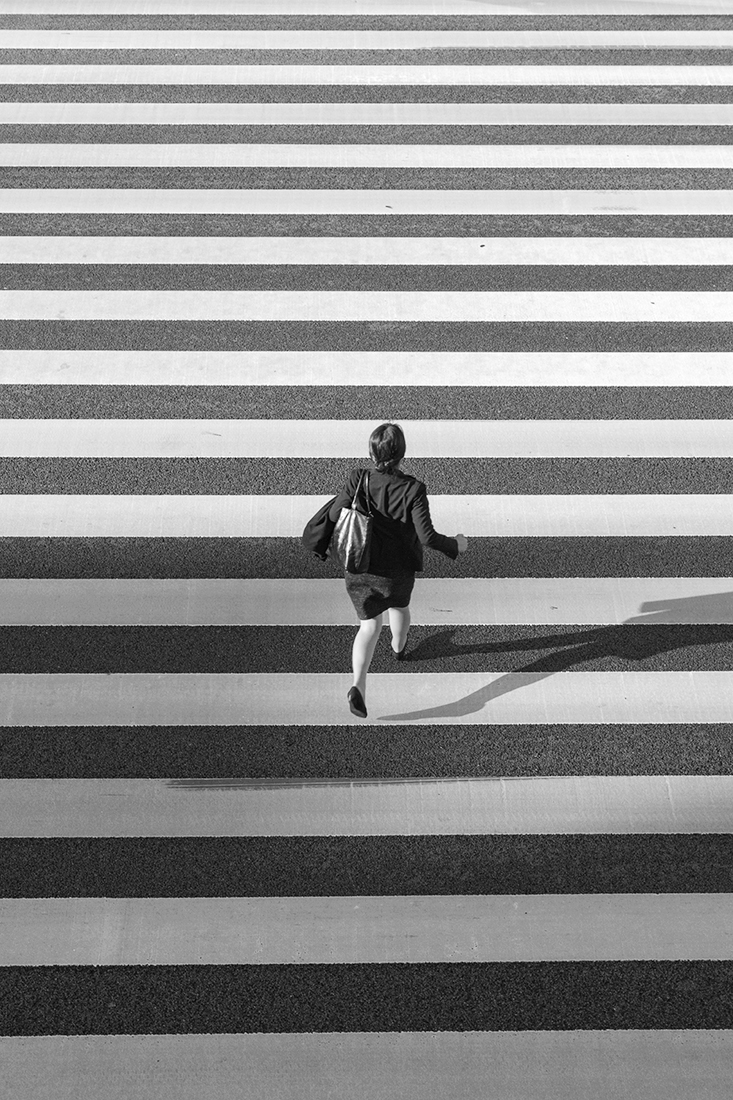
TITLE: Without time
AUTHOR: Juan Carlos Pinto (Japan)
A photographer from Mexico based in Zushi, Kanagawa, Japan. He holds a Bachelor's degree in Literature from the Universidad Autónoma de Zacatecas and is a Master's degree candidate in Literature at the Universidad Nacional Autónoma de México. He is the author of the short story book "El largo espejismo". He was the deputy director of the State Company of Oral Narration of Zacatecas.
In 2011, he moved to Tokyo, and in 2015, he began his photographic activity. He is certified in Art Photography and Digital Imaging by Temple University Japan Campus. In 2019, by recommendation of the Cultural Section of the Embassy of Mexico in Japan, he represented Mexico at the World Art Tokyo 2019 with his series "Los Rastros Solitarios de la Luz". To date, he has participated in over twenty collective and individual exhibitions in Japan, Mexico, and other countries. He has published three photography books: "Los Rastros Solitarios de la Luz" (TEXERE, Mexico, 2019), "THE BUNKERS", and "REES' BUNKER" (both by ENYSi, Japan, 2021). The compilation book "Jiko Kyōkai" (KAMI, Spain) was published in 2025.
He has been awarded, among others, the Excellence Award and the Jury Prize at the "Epson meet up! selection" (2017 and 2018 respectively, Japan), the International Second Place in the landscape category of the "Head On Awards 2021" (Australia), and the Bronze Medal in the Architecture/Cityscape category of the "Tokyo International Foto Awards 2021" (Japan). He was also selected as a finalist in the LensCulture Street Photography Awards 2022 (Netherlands), won a Bronze Medal at the PX3 Prix de la Photographie Paris 2023 (France), and was a double semi-finalist in the Street Photography and Spaces categories at the Urban Photography Awards 2023 (Italy), as well as second place in the Nature category at the Monochrome Photography Awards 2025.
In his transition from the world of words to the world of photography, Pinto continues to apply a principle of selection and restriction in his work: what is said is as important as what is left unsaid; what is not present in the photograph is as important as what is. Thus, in his photographic work, he seeks to simplify the selection of space and bring a single subject into play. Rather than the interaction between subjects, he tries to reflect on the unnoticed interaction of subjects with their environment and the ephemeral passage of light. His intention is for the viewer to find in his work a reflection of the aesthetic potential of their own daily life and the world around them.
Among his influences are the images and narratives of the Golden Age of Mexican Cinema, the literature of the Latin American Boom, and the work of photographers such as Fan Ho and Sam Abell.
SHARE
Support this photographer - share this work on Facebook.